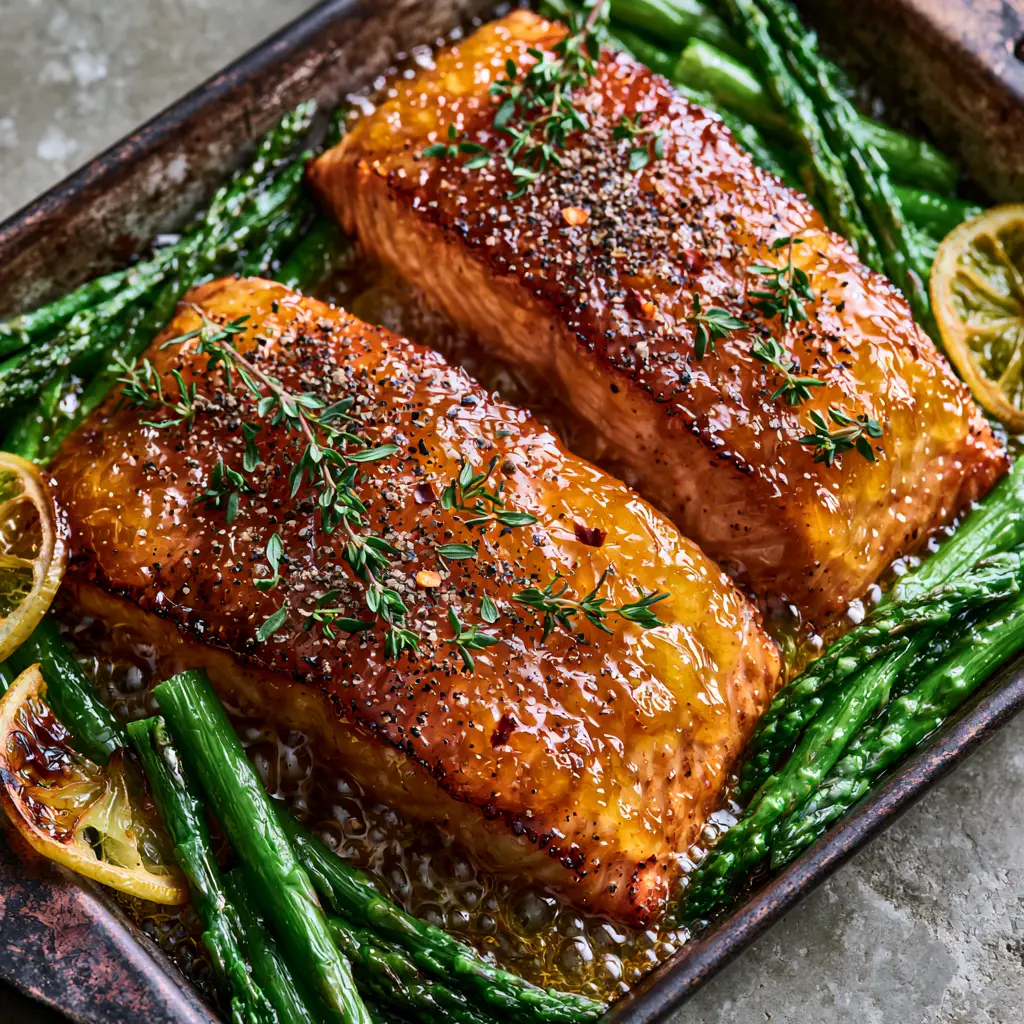
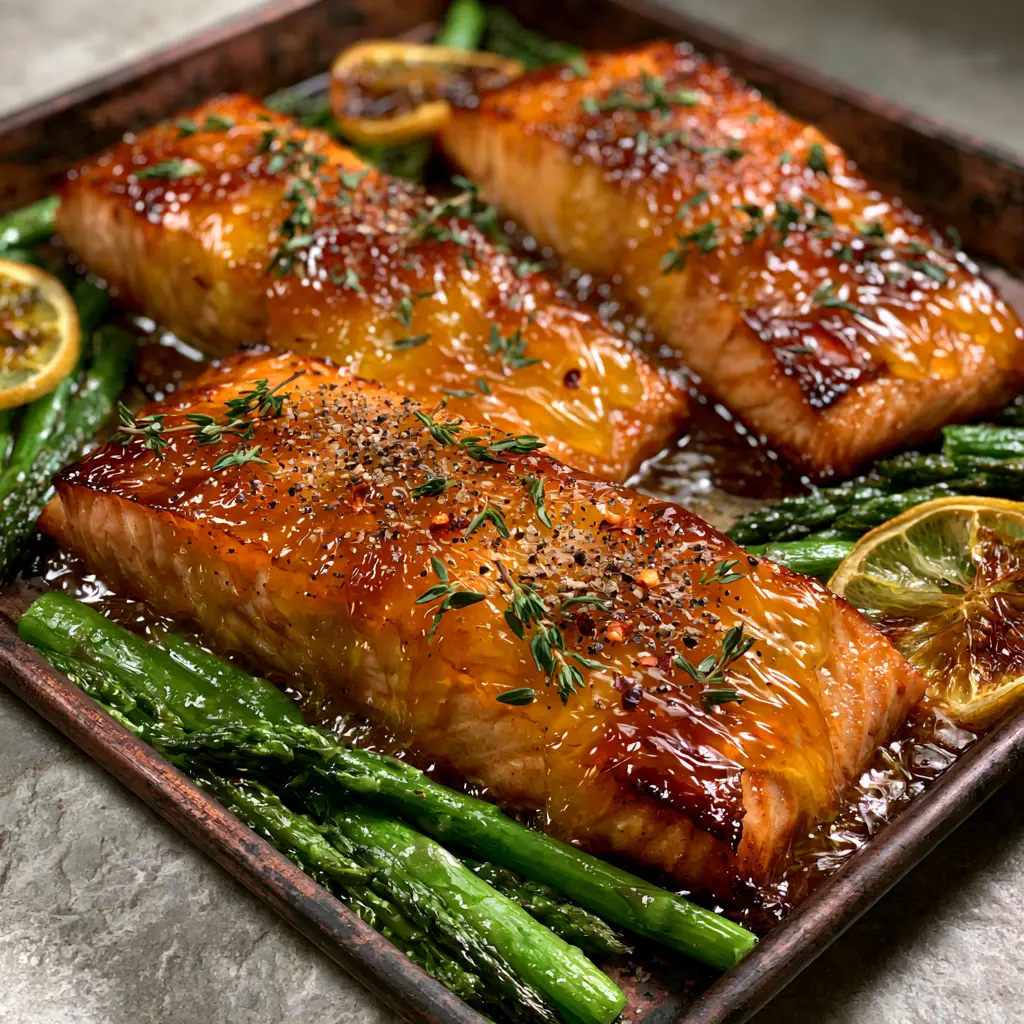
There is a specific kind of magic that happens when high-quality Atlantic salmon meets a high-shine, “glisten and glow” fruit glaze. This Apricot Dijon Glazed Salmon isn’t just another weeknight dinner; it is a sensory experience designed to mimic the high-end aesthetic of a professional food blog right in your own kitchen. Imagine three thick, succulent fillets resting on a rustic pan, their surfaces bubbling with a translucent, golden-orange coating that caramelizes at the edges while the interior remains buttery and flaky.
The visual appeal of this dish is undeniable, featuring bright green asparagus spears and thin, charred lemon wheels that provide a sharp, citrusy contrast to the sweet and savory glaze. Every bite is accented by the earthy aroma of fresh thyme leaves and the gentle heat of coarse cracked black pepper and tiny red chili flakes. If you enjoy our Salmon with Bourbon Glaze, you will find this apricot-based version to be a brighter, more vibrant cousin that is perfect for any season.
Why This Sheet Pan Salmon Recipe Works
- The “Glisten and Glow” Factor: We utilize the natural pectins in apricot preserves to create a glaze that doesn’t just sit on the fish but creates a thick, glossy, and translucent shell.
- Perfectly Balanced Profiles: The sharp tang of Dijon mustard cuts through the sugar of the apricots, while the savory salmon fats provide the perfect canvas for the fresh thyme and chili flakes.
- One-Pan Efficiency: By roasting the asparagus and lemons alongside the salmon, the juices mingle, creating a built-in sauce for your vegetables.
- Texture Contrast: You get a soft, flaky fish texture paired with the crisp-tender snap of perfectly roasted asparagus.
The Golden Glaze: Essential Ingredients for Success
To achieve the visual and culinary results seen in our professional photography, each ingredient serves a scientific purpose. We aren’t just adding flavor; we are building a structural glaze that holds its shape under the broiler.
Thick Atlantic Salmon Fillets: You need fillets at least 1.5 inches (3.8cm) thick. This thickness ensures the glaze can caramelize under high heat without the interior of the fish overcooking and becoming dry.
Apricot Preserves: Use a high-quality preserve rather than a jelly. The small bits of real fruit add texture and a translucent glow that reflects light beautifully on the plate.
Dijon Mustard: This provides the necessary acidity and “bite.” It acts as an emulsifier, helping the apricot sugar and the salmon oils bond together rather than separating.
Fresh Thyme Leaves: Unlike dried herbs, fresh thyme provides a bright green pop against the orange glaze and a floral aroma that is released the moment the heat hits the pan.
Fresh Asparagus: Choose medium-width spears. If they are too thin, they will turn to mush before the salmon is done; if they are too thick, they won’t reach that “crisp-tender” state described in our blueprint.
Lemon Wheels: Thinly sliced lemons are essential. They char quickly, providing a smoky acidity that balances the sweetness of the apricot glaze perfectly.
Coarse Cracked Black Pepper & Red Chili Flakes: These aren’t just for flavor. They provide the “visual grit” that defines a high-end food aesthetic, breaking up the smooth surface of the glaze.
Foundational Tools for the Perfect Roast
To achieve the “unedited handheld photo” look of a professional chef, you need the right heat conductors. A dark, rustic sheet pan is preferred as it absorbs more heat, helping the lemon wheels and the edges of the glaze caramelize faster than a shiny aluminum pan would.
You will also need a high-quality pastry brush. This allows you to “dab” the glaze onto the salmon, ensuring a heavy, thick coating that results in that signature bubbling texture seen in the Midjourney prompt. A digital meat thermometer is also non-negotiable for ensuring the salmon reaches a safe 145°F (63°C) while maintaining its succulent, flaky interior.
Step-by-Step: Crafting the Apricot Dijon Glazed Salmon
Preparing the Signature Glaze
In a small saucepan over low heat, combine 1/2 cup (120ml) of apricot preserves with 2 tbsp (30ml) of Dijon mustard. Whisk gently until the preserves melt into a smooth, translucent liquid. Add a pinch of salt and a splash of apple cider vinegar to brighten the flavors. This step ensures the glaze is “bubbling” even before it hits the oven, setting the stage for deep caramelization.
Setting the Sheet Pan Stage
Preheat your oven to 400°F (200°C). Arrange your three thick salmon fillets in the center of the dark sheet pan. Surround them with 1 lb (450g) of trimmed asparagus spears and 1 thinly sliced lemon. Drizzle the vegetables with 1 tbsp (15ml) of olive oil and a pinch of salt. Ensure the lemons are laying flat so they can achieve that beautiful charred appearance.
The Glazing Technique
Using your pastry brush, generously coat the salmon fillets with the apricot-dijon mixture. You want a heavy coating—think “thick and succulent.” Sprinkle the coarse cracked black pepper and a few tiny red chili flakes directly onto the wet glaze so they adhere. This creates the “visual recipe blueprint” look where the seasonings are embedded in the glossy surface.
The Roasting and Broiling Process
Roast for 10-12 minutes. For the final 2 minutes, switch the oven to “Broil.” Watch closely as the glaze begins to bubble and turn a deep golden-orange at the edges. You are looking for the “glisten and glow” effect. The lemons should show dark, charred edges, and the asparagus should be bright green and slightly blistered.
The Final Garnish
Once removed from the heat, immediately scatter the fresh thyme leaves over the hot salmon. The residual heat will wake up the oils in the thyme, filling your kitchen with an incredible aroma. Serve directly from the rustic pan for that authentic, unedited food blog aesthetic.
Expert Tips for Success
- Pat the Fish Dry: Before adding the glaze, use a paper towel to remove all moisture from the salmon surface. This allows the glaze to stick rather than sliding off into the pan.
- Don’t Over-mix the Glaze: Leave some small fruit chunks from the preserves; they catch the light and create those “succulent” visual highlights.
- The Lemon Trick: If your lemons aren’t charring fast enough, move them directly under the broiler flame for the last 60 seconds of cooking.
- Asparagus Sizing: If you only have very thin asparagus, add them to the pan halfway through the cooking time so they don’t overcook.
The Science of Flaky Salmon
Salmon flakiness is a result of the connective tissue (collagen) breaking down between the muscle fibers. By using a thick glaze, we create an insulation layer. This allows the heat to penetrate slowly, ensuring the albumin (the white protein that sometimes leaks out) stays inside the fish, leaving you with a clean, professional look and a moist mouthfeel.
If you find yourself with extra salmon, you can easily repurpose the leftovers for Salmon Rice Bowls or even a cold Salmon Pasta Salad.
What to Serve With This Dish
While the asparagus provides a built-in side, this Apricot Dijon Glazed Salmon pairs beautifully with starch-heavy sides that can soak up any extra glaze. We recommend a side of Slow Cooker Baby Potatoes for a hands-off addition. If you want to lean into the vegetable-forward nature of the meal, a side of Oven Roasted Zucchini and Squash or a crisp Cucumber Onion Salad provides a refreshing textural contrast.
Storage, Reheating, and Freezing
To Store: Keep the salmon in an airtight container for up to 3 days in the refrigerator. The glaze will thicken further, making it even more delicious the next day.
To Reheat: Avoid the microwave if possible, as it can make the salmon rubbery. Instead, place the salmon in a 275°F (135°C) oven for 10 minutes with a splash of water in the pan to maintain moisture.
To Freeze: We do not recommend freezing the cooked salmon as the apricot glaze can become watery upon thawing, ruining the “glossy” aesthetic we worked so hard to achieve.
Frequently Asked Questions
Yes! You can whisk the glaze together and store it in the fridge for up to a week. Just warm it slightly before brushing it onto the fish.
While jelly works, preserves are preferred. The small pieces of fruit in preserves provide a better ‘glisten’ and more succulent texture for the final visual result.
The salmon is done when it reaches an internal temperature of 145°F (63°C) and the layers of the fish separate easily when pressed with a fork.
Thick Atlantic salmon fillets are best. Their higher fat content and thickness allow the glaze to caramelize under the broiler without overcooking the center.
This usually happens if the salmon is wet. Always pat the fillets dry with a paper towel before applying the glaze to ensure it adheres and bubbles properly.
The Perfect Apricot Dijon Glazed Salmon Recipe
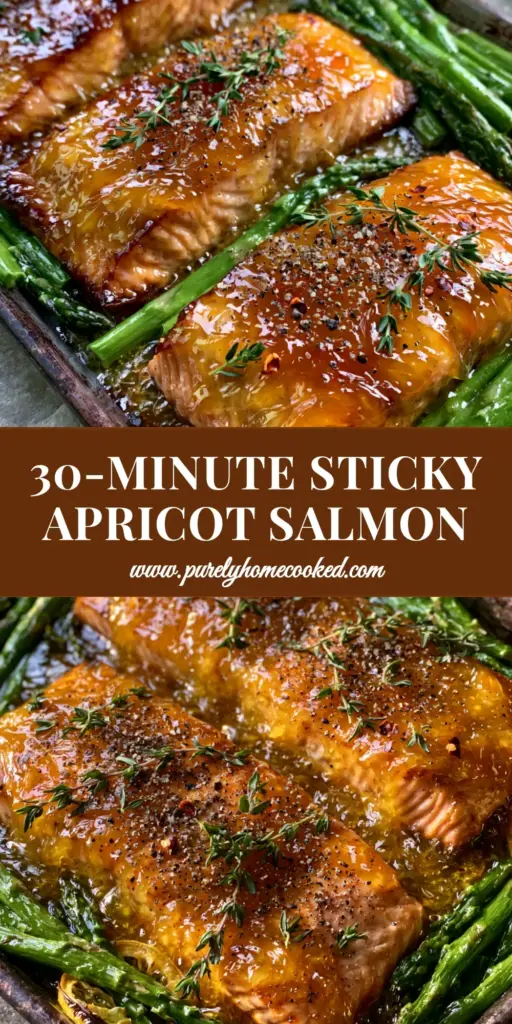
Apricot Dijon Glazed Salmon: The Ultimate Sheet Pan Gourmet Dinner
Ingredients
Equipment
Method
- Combine apricot preserves, Dijon mustard, and vinegar in a small saucepan over low heat until melted and translucent.
- Place salmon, asparagus, and lemon wheels on a dark sheet pan. Drizzle veggies with oil and salt.
- Brush a thick layer of glaze over the salmon. Top with cracked pepper and chili flakes.
- Roast at 400°F (200°C) for 10-12 mins, then broil for 2 mins until the glaze is bubbling and lemons are charred.
- Scatter fresh thyme over the hot fillets and serve immediately.
Notes
Use a dark sheet pan to achieve the best charred edges on the lemon wheels.
Transform Your Dinner Table Today
This Apricot Dijon Glazed Salmon is proof that you don’t need a professional kitchen to produce restaurant-quality results. By focusing on the visual cues—the bubbling glaze, the charred lemons, and the vibrant herbs—you create a meal that is as beautiful as it is delicious. We invite you to try this recipe and share your results! If you enjoyed this sheet pan dinner, please leave a comment below and follow us on Pinterest for more culinary inspiration.