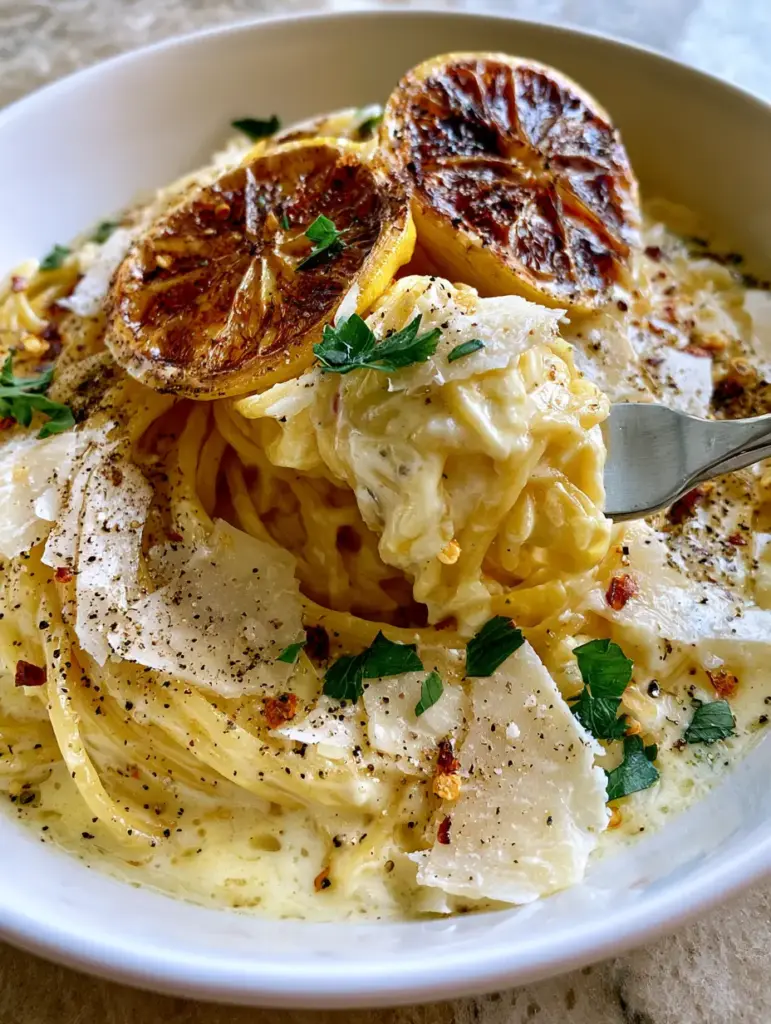
There is a specific kind of magic that happens when high-quality butter, heavy cream, and zesty citrus collide in a hot pan. This Creamy Lemon Garlic Pasta isn’t just a meal; it is a sensory experience designed to mimic the high-end bistro feel right in your own kitchen. Imagine a shallow white ceramic bowl, cradling a perfect swirl of al dente spaghetti strands drenched in a thick, glossy, pale-yellow sauce that clings to every curve of the noodle.
The visual appeal is the first thing that hits you—vibrant green flat-leaf parsley and bright red chili flakes pop against the velvety cream. But the real showstopper? The pan-seared lemon wheels with their deeply charred edges and caramelized rinds that add a smoky, concentrated citrus punch you won’t find in a standard pasta dish. This recipe is engineered for those who crave restaurant-quality textures and professional-level flavor depth with minimal effort.
Whether you are looking for a sophisticated date-night dinner or a quick weeknight glow-up, this dish delivers. It captures the buttery sheen and luxurious mouthfeel of a classic Alfredo but elevates it with the brightness of fresh lemon and the pungent warmth of toasted minced garlic. Let’s dive into how you can recreate this visually stunning and palate-pleasing masterpiece.
Why This Velvety Citrus Pasta Will Become Your New Obsession
- The Emulsion Perfection: We use a specific technique to combine pasta water and heavy cream, ensuring a sauce that never breaks and stays glossy until the last bite.
- Textural Contrast: Between the tender spaghetti, the soft charred lemon rinds, and the crisp bite of fresh parsley, every forkful offers a new sensation.
- Sophisticated Flavor Profile: The toasted garlic provides a nutty base that perfectly balances the sharp acidity of the lemon and the heat of the red chili flakes.
- Visual Elegance: With large, thin shavings of aged parmesan and cracked black pepper, this dish looks like it was plated by a professional chef for a magazine shoot.
Essential Components for a Glossy Lemon-Butter Cream Sauce
Spaghetti (8 oz / 225g): Long strands are essential for this recipe as they provide the maximum surface area for the velvety lemon-butter cream sauce to adhere to. If you are out of spaghetti, you could try a similar long-cut noodle found in our garlic butter pasta guide.
Heavy Cream (1 cup / 240ml): This is the foundation of our “thick and glossy” sauce. The high fat content is necessary to prevent the lemon juice from curdling the sauce and provides that luxurious mouthfeel.
Unsalted Butter (4 tbsp / 56g): Butter adds a golden sheen and a rich, rounded flavor that olive oil alone cannot achieve. It is the secret to that “buttery sheen” described in our visual blueprint.
Fresh Lemons (2 Large): You will need one for juicing and zesting, and the other to be sliced into thin wheels for pan-searing. The charred lemon wheels are the signature garnish that defines the dish’s aesthetic.
Fresh Garlic (4-5 Cloves): We mince this finely to ensure it toasts quickly in the butter, releasing its essential oils without becoming bitter or burnt. Garlic lovers might also enjoy our beef and garlic butter pasta for a heartier variation.
Aged Parmesan Cheese (1/2 cup / 45g): Avoid the canned stuff. You want a block of Parmigiano-Reggiano that you can shave into large, thin ribbons to melt slightly over the hot pasta.
Flat-Leaf Parsley & Red Chili Flakes: These are not just garnishes; they provide the “vibrant green” and “tiny red” visual cues that signal freshness and a hint of spice.
Pasta Water (1/2 cup / 120ml): Often called “liquid gold,” this starchy water is the invisible ingredient that binds the fats and liquids into a cohesive, velvety sauce.
Must-Have Kitchen Tools for Culinary Precision
To achieve the charred lemon slices and the perfectly swirled pasta, you will need a large 12-inch (30cm) stainless steel or cast-iron skillet. These materials hold heat better than non-stick pans, allowing for the Maillard reaction to occur on the lemon rinds. A microplane zester is also crucial for getting fine ribbons of lemon zest without the bitter white pith.
Lastly, a high-quality vegetable peeler or a cheese plane is required to create those signature large parmesan shavings. Using a standard grater won’t give you the same dramatic visual effect seen in the handheld smartphone photo of this dish.
Mastering the Art of the Pan-Sear: A Step-by-Step Guide
Achieving the Perfect Al Dente Spaghetti
Bring a large pot of heavily salted water (it should taste like the sea) to a rolling boil. Add your spaghetti and cook for exactly one minute less than the package directions. We want the pasta to finish cooking inside the sauce so it absorbs the lemon and garlic flavors directly into the grain.
Caramelizing the Lemon Wheels
While the pasta boils, heat 1 tablespoon (15ml) of olive oil in your skillet over medium-high heat. Place the lemon slices in a single layer. Sear them for 2-3 minutes per side without moving them, until you see charred edges and a caramelized, deep-yellow rind. Remove them from the pan and set aside; these will be your crowning glory during plating.
Building the Garlic-Infused Cream Base
Reduce the heat to medium and add the butter to the same skillet. Once foaming, toss in the minced garlic. Watch for the sensory cue: as soon as the garlic smells fragrant and turns a pale golden brown (usually 1 minute), pour in the heavy cream and lemon zest. Whisk constantly as the sauce begins to simmer and thicken naturally.
The Emulsification Process
Add the undercooked spaghetti directly from the water into the skillet using tongs. Pour in about 1/4 cup (60ml) of the reserved pasta water. Toss vigorously. You will see the sauce transform from a thin liquid into a thick, glossy, pale-yellow coating that clings to every strand. If it looks too dry, add a splash more pasta water.
The Final Flourish and Garnish
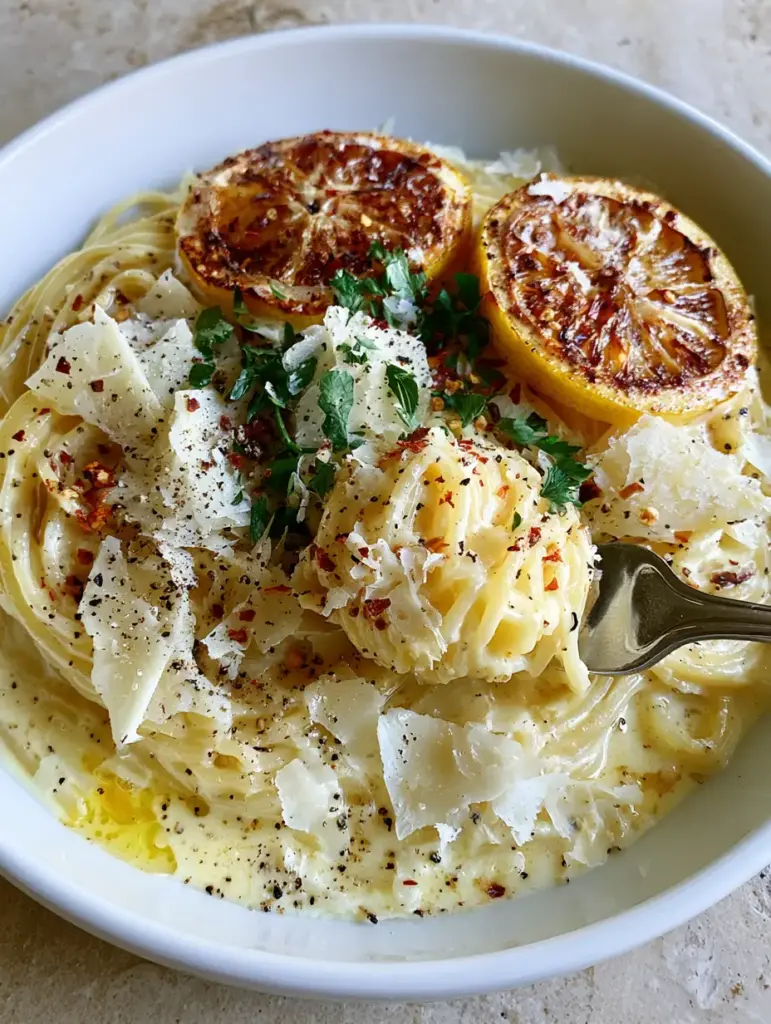
Turn off the heat. Squeeze in the juice of half a lemon and toss one last time. Plate the pasta in shallow bowls, creating a high swirl in the center. Top with the seared lemon wheels, a heavy dusting of freshly cracked black pepper, the large parmesan shavings, a sprinkle of parsley, and those characteristic red chili flakes.
Expert Tips for a Restaurant-Quality Finish
- Don’t Rinse the Pasta: The starch on the surface of the noodles is what allows the Creamy Lemon Garlic Pasta sauce to stick. Rinsing will result in a watery mess.
- Temperature Control: Never boil the cream on high heat after adding the lemon juice, or the sauce might break. A gentle simmer is all you need.
- The “Shave” Factor: Use a room-temperature block of Parmesan for the shavings. If the cheese is too cold, it will snap into small pieces instead of forming long, elegant ribbons.
- Salt Balance: Since parmesan and pasta water are both salty, taste the sauce before adding any additional salt at the end.
Smart Storage and Reheating Strategies
This pasta is best enjoyed immediately while the sauce is at its peak silkiness. However, if you have leftovers, store them in an airtight container in the refrigerator for up to 2 days. To reheat, add the pasta to a pan with a splash of milk or cream over low heat, tossing gently to re-emulsify the sauce.
Freezing is not recommended for this specific Creamy Lemon Garlic Pasta because the cream-based sauce can separate and become grainy upon thawing. For a freezer-friendly option, consider our tuna pasta bake recipe.
What to Serve with Your Creamy Lemon Pasta
To balance the richness of the cream and butter, pair this dish with a crisp, acidic side. A simple arugula salad with a light vinaigrette works wonders. If you are looking for more vegetable-forward sides, our cucumbers and onions in vinegar provide a refreshing crunch that cuts through the velvety sauce.
For a complete Italian-inspired feast, serve this alongside some crusty sourdough bread to soak up every last drop of the lemon-garlic emulsion. If you want to add a protein boost, top the pasta with grilled shrimp or sliced chicken breasts seasoned with the same spices used in our cajun chicken penne pasta.
Your Questions Answered: Pasta FAQ
You can substitute heavy cream with full-fat coconut milk and use a plant-based butter, though the flavor profile will shift slightly toward a coconut-citrus blend.
Always reserve your pasta water. The starch in the water acts as an emulsifier, binding the butter and cream to the spaghetti strands for a glossy finish.
Use heavy cream with a high fat content and add the lemon juice at the very end of the cooking process over low heat. The fat in the cream acts as a stabilizer.
Long, thin pastas like spaghetti, linguine, or fettuccine are best as they offer more surface area for the glossy sauce to coat each strand evenly.
Searing the lemons caramelizes the natural sugars in the fruit, reducing bitterness and creating a deep, smoky citrus flavor that complements the rich cream.
The Complete Creamy Lemon Garlic Pasta Recipe
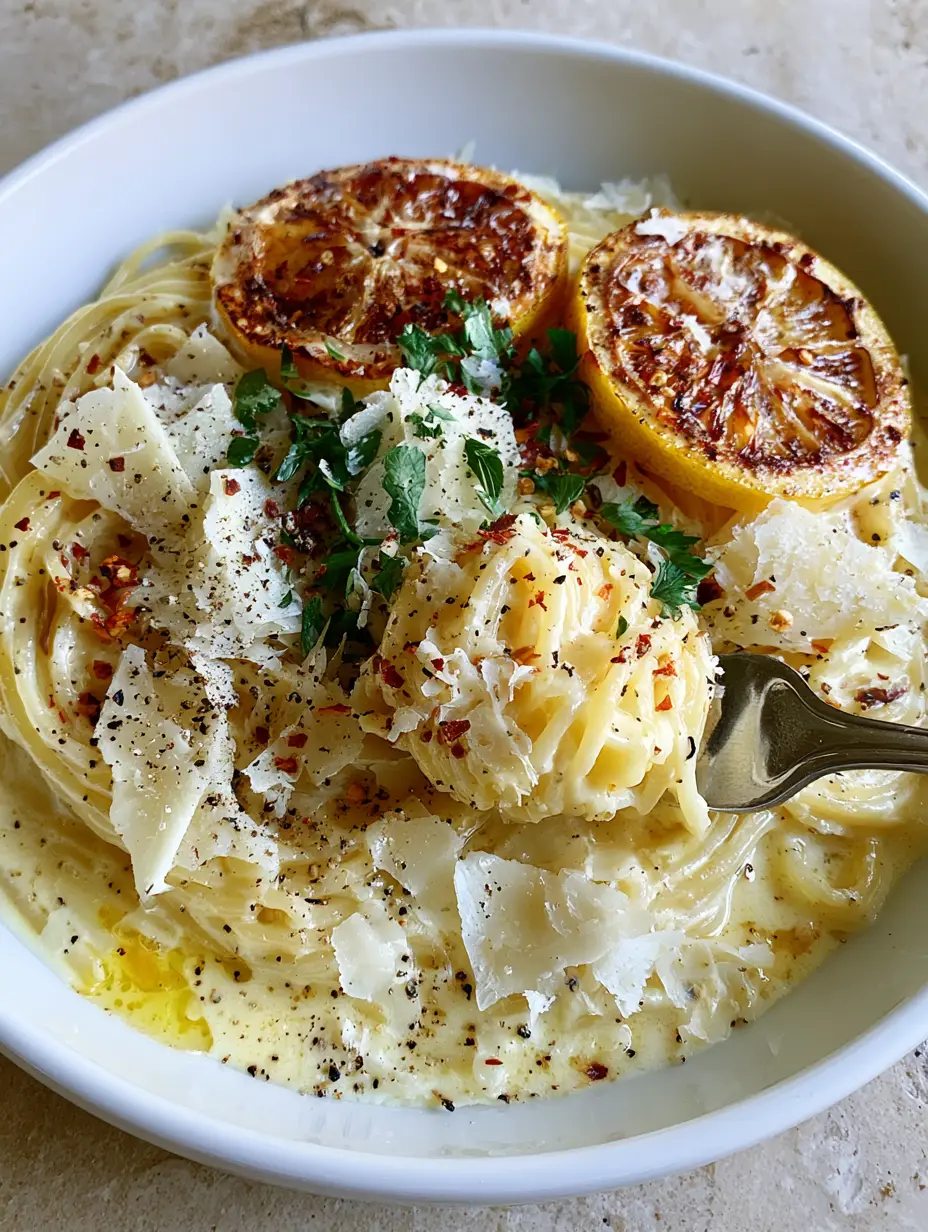
Creamy Lemon Garlic Pasta: The Ultimate 20-Minute Velvety Spaghetti
Ingredients
Equipment
Method
- Cook spaghetti in salted water until 1 minute before al dente. Reserve 1/2 cup (120ml) of pasta water before draining.
- In a skillet with 1 tbsp oil, sear lemon slices over medium-high heat until edges are charred and rinds are caramelized. Remove and set aside.
- Melt butter in the same skillet. Sauté minced garlic until fragrant. Stir in heavy cream and lemon zest, simmering gently for 2 minutes.
- Add pasta and reserved water to the skillet. Toss over medium heat until the sauce becomes thick, glossy, and pale-yellow.
- Plate with a swirl of pasta, top with charred lemons, parmesan shavings, parsley, black pepper, and chili flakes.
Notes
Ensure the cream doesn't reach a rolling boil to prevent curdling.
Bring the Bistro to Your Dinner Table
This Creamy Lemon Garlic Pasta is a testament to the fact that simple ingredients, when treated with the right techniques, can produce a world-class meal. From the charred lemon wheels to the velvety, sauce-laden noodles, every element of this dish is designed to impress both the eyes and the palate. The bright citrus notes and the deep, nutty garlic flavor create a balance that is rare in heavy cream-based dishes.
If you enjoyed making this visually stunning pasta, please leave a comment below and let us know how your seared lemons turned out! Don’t forget to sign up for our newsletter for more elite recipes and share your creations on Pinterest to inspire other home cooks.