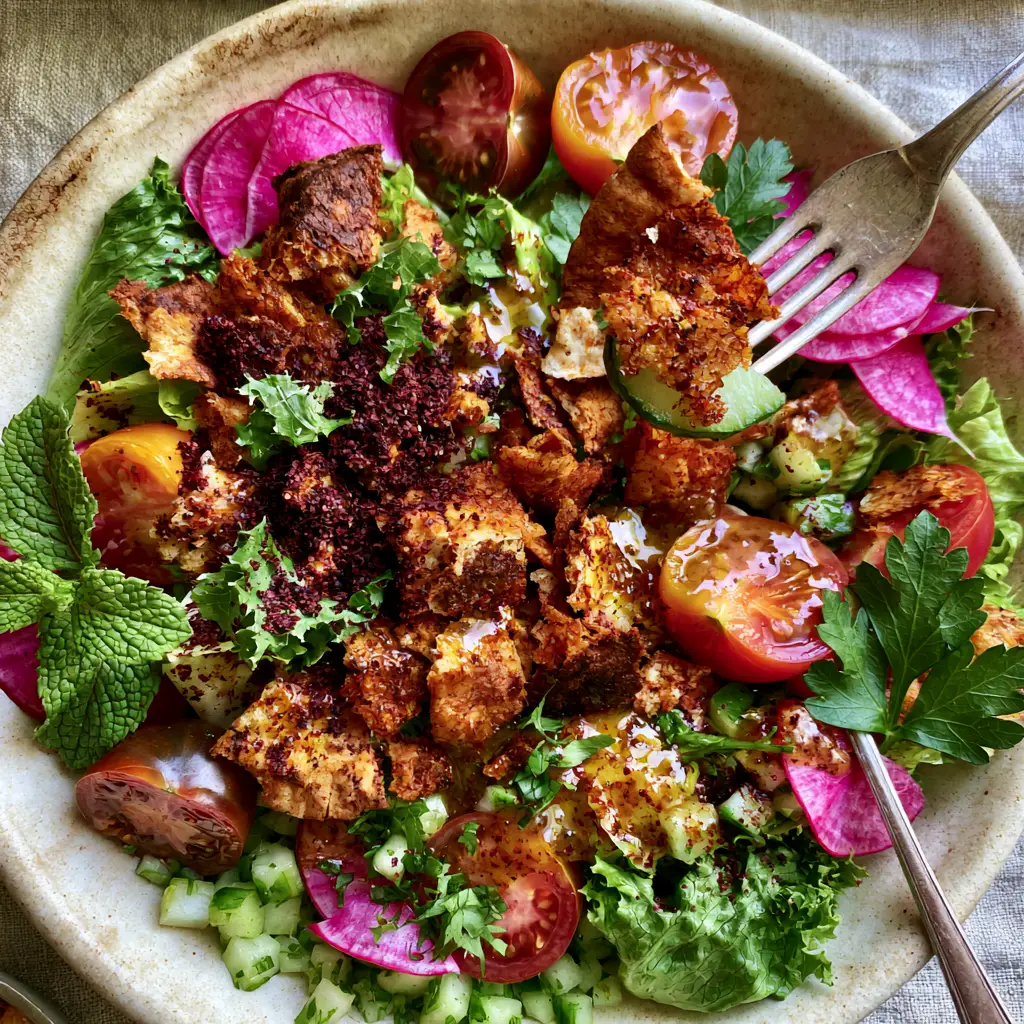
There is a specific, breathtaking moment when a Middle Eastern salad transcends the boundary of a simple side dish and becomes a culinary masterpiece. It happens when the emerald green of crisp romaine hearts meets the vibrant pink of paper-thin radishes, all brought together by the unmistakable, tangy sparkle of dark burgundy sumac. This isn’t just a salad; it’s a symphony of textures designed to dance across your palate with every single forkful.
Inspired by the traditional Levantine Fattoush, this Middle Eastern salad recipe focuses on the essential contrast between garden-fresh vegetables and the shatteringly crisp, deep golden-brown fried pita chips. When you look at the vibrant heirloom tomatoes nestled against finely diced Persian cucumbers, you see a dish that is as much a feast for the eyes as it is for the stomach. The gentle side-lighting of a sunny kitchen only enhances the glistening, thick lemon-sumac vinaigrette that coats every leaf and radish slice.
Whether you are looking for a light lunch or a show-stopping starter for a dinner party, this recipe delivers professional-grade results. We have meticulously crafted this guide to ensure your greens stay crisp, your pita stays crunchy, and your dressing remains perfectly emulsified. Let’s dive into the forensic details of making the perfect Middle Eastern salad in your own home kitchen.
The Signature Textures of an Authentic Levantine Crunch
- Shatteringly Crisp Pita: Unlike baked versions, our deep-fried pita chips provide a rich, golden-brown crunch that stands up to the lemon-heavy dressing.
- Vibrant Seasonal Produce: We use halved heirloom cherry tomatoes in deep red and orange tones for a burst of acidic juice that balances the earthy herbs.
- Complex Tangy Profile: A heavy dusting of ground sumac offers a unique, citrusy astringency that you simply cannot replicate with lemon alone.
- Precision Herb Blend: Large, hand-torn mint leaves and roughly chopped flat-leaf parsley provide a refreshing aromatic finish that cuts through the olive oil.
Essential Components for This Middle Eastern Salad Masterpiece
Crisp Romaine Hearts (2 large heads): The foundation of this Middle Eastern salad must be structurally sound. We use the inner hearts of romaine for their superior crunch and ability to hold onto the emulsified dressing without wilting immediately.
Persian Cucumbers (3 medium / 250g): These are essential for their thin skin and nearly seedless interior. Dicing them finely ensures that you get a bit of cucumber in every bite, providing a cool, hydrating contrast to the fried elements.
Heirloom Cherry Tomatoes (1 cup / 150g): Choose a variety of colors like deep mahogany, bright orange, and ruby red. Halving them exposes their juicy interior, which naturally mingles with the vinaigrette to create a secondary sauce on the plate.
Fresh Radishes (4-5 roots / 50g): Slicing these into paper-thin translucent rounds provides a peppery bite and a vibrant pink visual pop. They should be so thin that they slightly curl when placed in cold water.
Pita Bread (2 large rounds): Traditional Lebanese-style thin pita is best. When fried, it puffs slightly and creates a honeycomb-like interior that traps the sumac powder and dressing.
Neutral Frying Oil (1/2 cup / 120ml): We use avocado or grapeseed oil to achieve that deep golden-brown color on the pita without adding an overpowering flavor. This is the “invisible” ingredient that ensures the ultimate crunch.
Extra Virgin Olive Oil (1/3 cup / 80ml): This is the backbone of our dressing. Use a high-quality, cold-pressed oil with peppery notes to complement the fresh herbs.
Fresh Lemon Juice (3 tbsp / 45ml): This provides the primary acid. It must be freshly squeezed to provide the bright, high-frequency citrus notes that characterize a Middle Eastern salad.
Ground Sumac (2 tsp / 5g): This dark burgundy spice is non-negotiable. It adds a tart, almost vinegar-like depth and a stunning visual contrast against the green herbs.
Fresh Mint and Parsley (1/2 cup each / 15g): We use flat-leaf parsley for its clean flavor and fresh mint leaves for their cooling aroma. Do not over-chop; tearing the mint by hand prevents bruising and preserves the essential oils.
Kosher Salt and Black Pepper: Critical for seasoning layers. We season the vegetables before adding the pita and dressing to ensure every cell of the salad is flavorful.
Professional Tools for the Perfect Salad Execution
To achieve the macro-shot quality seen in professional food styling, you will need a few specific tools. A sharp mandoline is indispensable for achieving those paper-thin radish slices that catch the light so beautifully. You will also need a heavy-bottomed skillet or small Dutch oven for frying the pita chips to a uniform golden brown.
A large, matte ceramic bowl (preferably in a cream or neutral tone) provides the perfect backdrop for the vibrant reds and greens of the Middle Eastern salad. Finally, a small glass jar or a high-speed whisk is required to properly emulsify the lemon and olive oil into a thick, glistening vinaigrette that won’t separate on the leaves.
Step-by-Step Evolution of the Ultimate Fattoush
Creating the Golden-Brown Pita Shatter
Start by cutting your pita rounds into 1-inch (2.5cm) squares or irregular triangles. In a small skillet, heat 1/2 cup (120ml) of neutral oil over medium-high heat until it reaches approximately 350°F (175°C). You can test this by dropping in a small piece of pita; it should sizzle immediately upon contact.
Fry the pita pieces in small batches to avoid overcrowding the pan. Watch closely for the visual cue: you are looking for a deep, even golden-brown. Once they reach this stage, remove them with a slotted spoon and drain on a paper towel. Immediately dust them with a pinch of sea salt and a half-teaspoon of sumac while the oil is still wet so the spices adhere perfectly.
Precision Vegetable Preparation
Wash your romaine hearts in ice-cold water and spin them completely dry. Any residual moisture will prevent the dressing from sticking. Chop the romaine into 1-inch (2.5cm) ribbons, ensuring you have a mix of the crunchy stems and tender leaf tops. For the Persian cucumbers, dice them into small, uniform 1/2-inch (1cm) cubes.
Using a mandoline or a very sharp chef’s knife, slice the radishes into translucent rounds. If you want them extra crisp, soak them in an ice bath for 5 minutes, then pat dry. Halve your heirloom cherry tomatoes carefully to maintain their structure. This Middle Eastern salad relies on the integrity of these shapes to create that professional, high-resolution texture.
Emulsifying the Sumac Vinaigrette
In a small bowl or jar, combine the 1/3 cup (80ml) extra virgin olive oil, 3 tablespoons (45ml) lemon juice, 1 teaspoon (2.5g) of sumac, a pinch of salt, and a crack of black pepper. Whisk vigorously or shake the jar until the liquid becomes opaque and thick. This emulsification is what gives the salad its glistening, light-catching quality.
The Final Artistic Assembly
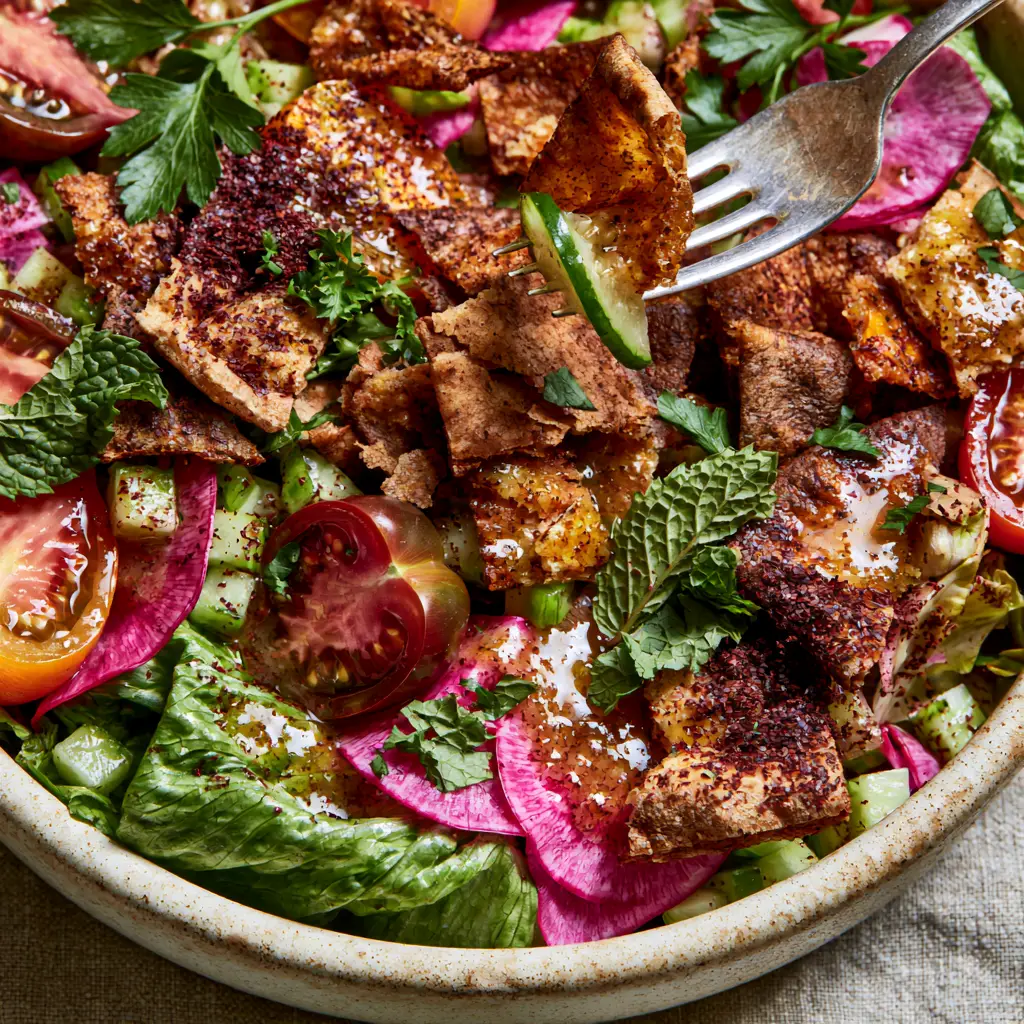
In your large ceramic bowl, toss the romaine and cucumbers with half of the dressing. This ensures the base layer is seasoned. Layer the halved heirloom tomatoes and radish slices on top. Gently fold in the hand-torn mint leaves and chopped parsley, keeping them near the surface for maximum visual impact.
Just before serving, scatter the fried pita chips generously over the top. Drizzle the remaining dressing over the pita and vegetables. Finish with a heavy dusting of the remaining burgundy sumac. Use a silver fork to lift a “perfect bite”—one pita chip, a slice of cucumber, and a leaf of mint—to showcase the layers of this Middle Eastern salad.
Expert Tips for Culinary Success
- Temperature Control: Ensure your pita chips are completely cooled before adding them to the salad. Adding hot chips will wilt the delicate romaine and mint instantly.
- The Drying Stage: The secret to a non-soggy Middle Eastern salad is bone-dry greens. Use a salad spinner twice if necessary.
- Acid Balance: If your tomatoes are particularly sweet, you may want an extra squeeze of lemon. If they are very acidic, a tiny pinch of sugar in the dressing can balance the flavors.
- Herb Integrity: Never use a food processor for the herbs. The heat from the blades will oxidize the parsley and turn the mint black. Hand-chopping is the only way to maintain that vibrant green color.
Preserving the Freshness: Storage and Prep
This Middle Eastern salad is best enjoyed immediately after assembly to experience the peak crunch of the pita. However, you can prep the components ahead of time. Store the chopped vegetables in an airtight container with a damp paper towel over the top for up to 24 hours. Keep the fried pita chips in a dry, room-temperature container.
The dressing can be made up to three days in advance; just be sure to re-whisk it before serving. Once the salad is fully assembled with dressing and pita, it does not store well as the bread will soften and the greens will lose their structure. If you have leftovers, they make a delicious, albeit softer, breakfast bowl the next day.
What to Serve With Your Middle Eastern Salad
This vibrant salad is a natural companion to grilled proteins and Mediterranean spreads. For a complete feast, serve it alongside a mediterranean grilled chicken or some warm lamb kabobs. The acidity of the sumac dressing cuts through the richness of grilled meats perfectly.
If you prefer a lighter, plant-based meal, pair this salad with a side of mediterranean quinoa salad for extra protein and fiber. It also works beautifully as a refreshing contrast to a hearty white bean salad. For those who love a variety of textures, placing this alongside a cucumber and onion salad creates a beautiful spread of fresh garden flavors.
Common Questions About Fattoush and Middle Eastern Salads
To make this Middle Eastern salad gluten-free, substitute the pita bread with gluten-free pita rounds or fried chickpeas for a similar crunch.
While sumac has a unique earthy-tart flavor, you can mimic its acidity with extra lemon zest and a tiny pinch of citric acid, though you will lose the signature burgundy color.
Yes, while they share some ingredients, Fattoush is defined by the addition of fried or toasted pita bread and the use of sumac in the dressing, whereas Greek salad features feta cheese and oregano.
Persian cucumbers are the gold standard because they have thin, edible skins and very few seeds, which prevents the salad from becoming watery.
The secret is two-fold: deep-fry the pita instead of baking for a more durable crunch, and only add the chips to the salad immediately before serving to prevent them from absorbing moisture from the vegetables.
The Ultimate Middle Eastern Salad Recipe
Middle Eastern Salad: The Ultimate Crunchy Fattoush with Sumac Vinaigrette
Ingredients
Equipment
Method
- Heat the neutral oil in a skillet over medium-high heat. Fry pita squares in batches for 1-2 minutes until deep golden-brown. Drain on paper towels and season immediately with salt and 1/2 tsp of sumac.
- Wash and dry romaine thoroughly. Chop into ribbons. Dice cucumbers into uniform cubes. Use a mandoline to slice radishes into paper-thin rounds. Halve the cherry tomatoes.
- In a small jar, combine olive oil, lemon juice, 1 tsp sumac, salt, and pepper. Shake vigorously until thick and glistening.
- Toss romaine and cucumbers with half the dressing in a large ceramic bowl. Top with radishes, tomatoes, and herbs. Scatter the fried pita chips over the top. Drizzle with remaining dressing and a final heavy dusting of sumac.
Notes
Always use fresh lemon juice; bottled juice lacks the bright citrus notes required for this Middle Eastern salad.
Closing & Call to Action
This Middle Eastern salad is a testament to the power of fresh ingredients and thoughtful technique. By balancing the earthy sumac with bright citrus and the rich crunch of fried pita, you create a dish that is truly unforgettable. We invite you to try this recipe and experience the vibrant flavors of the Levant in your own home.
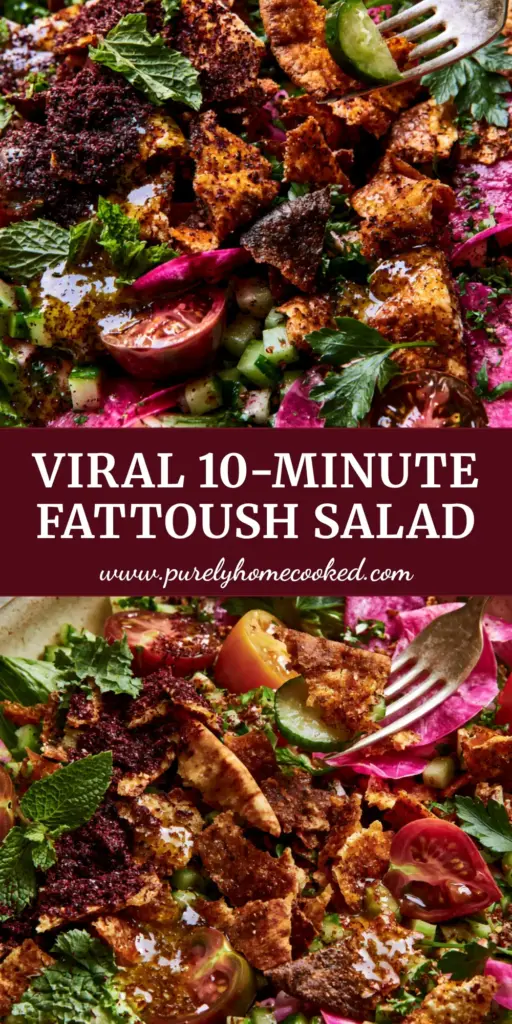
If you enjoyed this recipe, please leave a comment below and let us know how your pita chips turned out! Don’t forget to sign up for our newsletter for more professional-grade recipes delivered straight to your inbox. For more visual inspiration and to save this recipe for later, follow us and share this post to Pinterest.