There is an unspoken rule in West African cuisine: you cannot have a celebration without the presence of the legendary Nigerian party jollof rice. This isn’t just a meal; it is a cultural icon, defined by its signature smoky aroma, perfectly separated long-grain rice, and a vibrant, deep-red tomato-pepper reduction that coats every single grain.
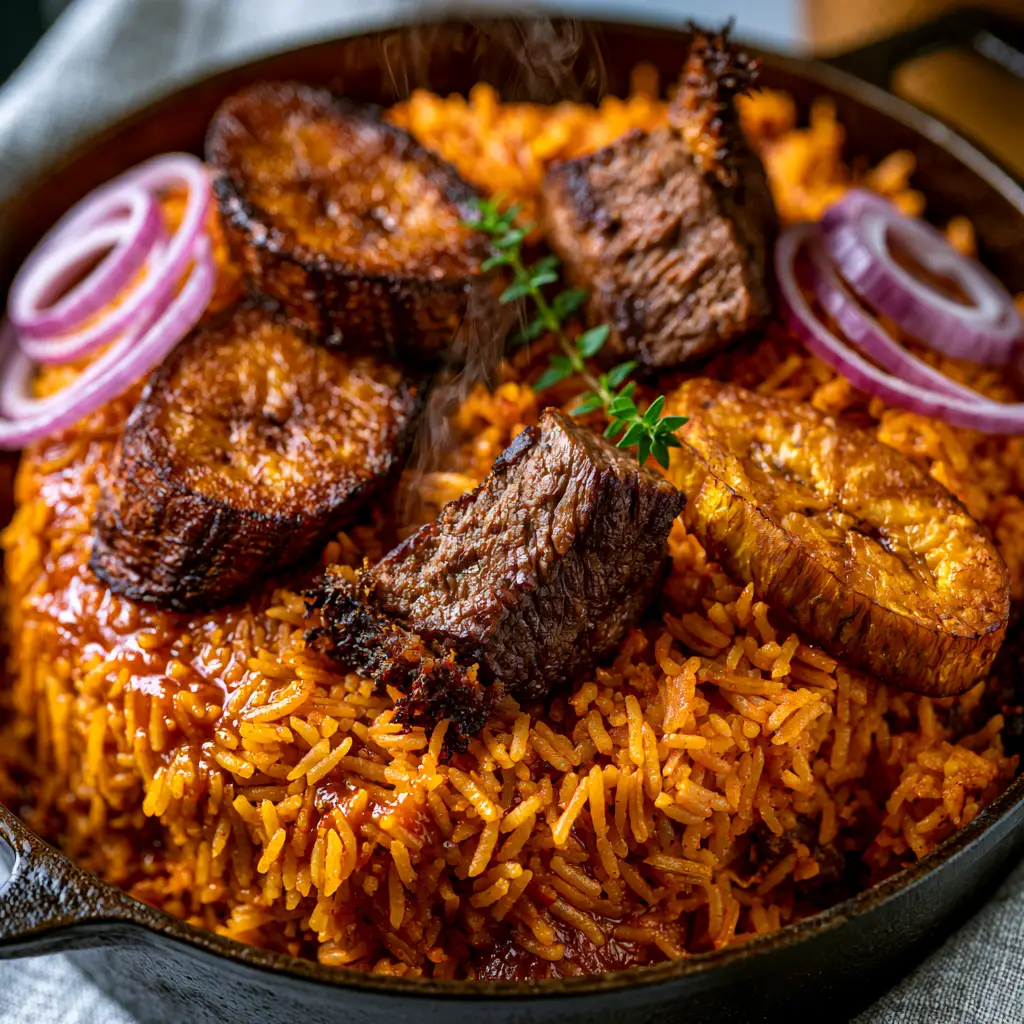
Imagine lifting the lid of a heavy, rustic black cast iron pot to reveal a mountain of steaming, glossy rice. The first thing that hits you is the fragrance—a blend of scorched bell peppers, warming ginger, and the savory undertone of slow-cooked beef. As the visible steam clears, you see the prize: grains that are tender yet firm, adorned with succulent seared beef chunks and golden, caramelized plantains.
In this comprehensive guide, we are diving deep into the culinary forensics of achieving that authentic “party flavor” at home. We will explore the science of the Maillard reaction in searing beef, the importance of parboiling rice to prevent mushiness, and the secret to that coveted charred base at the bottom of the pot.
The Signature Elements of Authentic West African Jollof
To recreate the visual and textural masterpiece described in our culinary blueprint, we must focus on several non-negotiable pillars of the dish. Achieving the perfect Nigerian party jollof rice requires more than just following a list; it requires an understanding of how these elements interact.
- The “Obaye” Foundation: A rich, oily reduction of red bell peppers (Tatashe), scotch bonnets (Rodo), and tomatoes fried until the water evaporates and the oil rises to the top.
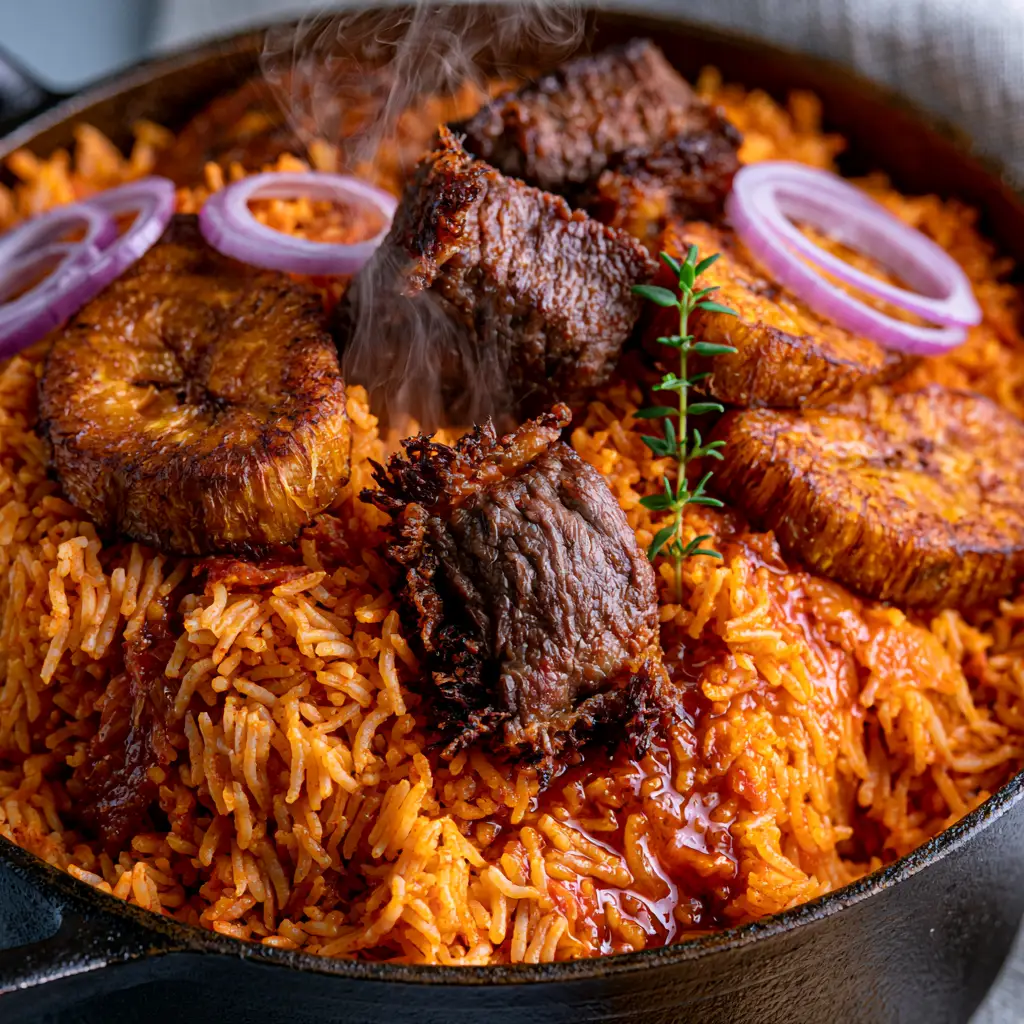
- Long-Grain Parboiled Rice: Unlike Basmati, parboiled rice has the structural integrity to withstand long steaming without breaking, resulting in the “grain-to-grain” separation seen in high-end food photography.
- The Smoky Infusion: That distinct “party” taste traditionally comes from firewood, but we will replicate it using a controlled charring process at the base of your cast iron pot.
- The Umami Bridge: Seared beef chunks with crispy, browned edges provide a savory contrast to the sweet and spicy rice base.
- Vibrant Toppings: Caramelized sweet fried plantains and raw red onion rings add layers of texture and a fresh, pungent bite to balance the richness.
The Essential Pantry for a Vibrant Tomato-Pepper Reduction
Creating the soul of Nigerian party jollof rice starts with the sauce. Each ingredient serves a specific purpose, from providing the deep-orange hue to building the complex flavor profile that characterizes this regional favorite.
Long-Grain Parboiled Rice: 4 cups (800g). This rice variety is pre-processed to ensure the starch is stable, which is critical for achieving the individual grain definition seen in our visual prompt.
Red Bell Peppers (Tatashe): 3 large (approx. 450g). These provide the bulk of the “deep-red” color and a sweet, earthy base for the sauce without adding excessive heat.
Scotch Bonnet Peppers: 2-3 peppers. These provide the characteristic “kick” and floral aroma that defines West African heat; adjust according to your spice tolerance.
Plum Tomatoes: 5 medium (approx. 500g). Tomatoes add the necessary acidity to brighten the sauce and contribute to the glossy, oily sheen of the finished grains.
Red Onions: 2 large (300g). Half will be blended into the sauce for sweetness, and the other half will be sliced into thin rings for the raw garnish that adds a sharp visual contrast.
Beef Chuck or Sirloin: 1 lb (454g). Cut into large chunks, these will be seared until they develop succulent, crispy edges that stand out against the soft rice.
Vegetable Oil: 1/2 cup (120ml). Essential for “frying” the tomato paste and pepper mix, ensuring the sauce is rich and the rice grains stay separated and glossy.
Beef Stock: 3 cups (720ml). A high-quality, flavorful stock provides the foundational liquid for the rice to absorb, infusing it with deep savory notes.
Tomato Paste: 1/4 cup (65g). This concentrated ingredient deepens the color to that vibrant “deep-orange” and adds a layer of umami. If you enjoy this flavor profile, you might also like a classic jollof rice recipe using chicken.
Spices & Aromatics: 1 tbsp (15g) curry powder, 1 tsp (5g) dried thyme, 3 bay leaves, and 2 garlic cloves. These provide the warming, herbaceous backbone of the dish.
Fresh Thyme: 1 sprig. A single green sprig used as a garnish to provide a pop of color and a fresh aroma as the steam rises from the pot.
Sweet Ripe Plantains: 2 large. These must be yellow with black spots to ensure they caramelize into golden-brown slices when fried.
Must-Have Equipment for Professional Results
To achieve the macro-level detail of individual grains and the charred “bottom pot” flavor, your choice of cookware is paramount. While any pot can cook rice, only specific tools will yield the “party” result.
- Black Cast Iron Pot or Dutch Oven: The heavy walls distribute heat evenly, and the thick base allows the rice to char slightly without burning through, creating the “bun-bun” flavor.
- High-Speed Blender: Necessary to create a perfectly smooth pepper and tomato puree, ensuring no chunky skins interrupt the glossy coating of the rice.
- Large Frying Pan: For searing the beef chunks and caramelizing the plantains separately to maintain their distinct textures.
- Aluminum Foil: Used to create a tight seal under the pot lid, trapping steam to cook the rice via “vapor pressure” rather than boiling.
Mastering the Art of the Smoky Tomato Reduction
Preparing the Pepper Base and Searing the Beef
The first step in crafting Nigerian party jollof rice is developing the flavor base. Blend the bell peppers, tomatoes, scotch bonnets, and one onion until completely smooth. Pour this into a pot and boil over medium heat until the water evaporates, leaving behind a thick, concentrated paste.
While the peppers reduce, season your beef chunks with salt and pepper. In your cast iron pot, heat 2 tablespoons (30ml) of oil over high heat. Add the beef and sear until a deep golden-brown crust forms on all sides. Remove the beef and set aside; those brown bits at the bottom of the pot (the fond) are flavor gold.
Building the “Obaye” (Frying the Sauce)
In the same pot with the beef drippings, add the remaining oil. Sauté sliced onions until translucent, then stir in the tomato paste. Fry the paste for 3-5 minutes until it turns a shade darker—this removes the metallic tinny taste and develops sweetness.
Add your boiled-down pepper puree to the pot. This is the most critical stage. Fry the mixture, stirring frequently, until the oil completely separates from the sauce and floats to the top. This “frying” process is what gives the rice its vibrant, glossy deep-red color.
The Steaming Process and the “Bottom Pot” Secret
Rinse your parboiled rice thoroughly under cold water to remove excess surface starch. Add the rice to the fried sauce and stir until every grain is coated in the oily reduction. If you prefer a lighter version, you could compare this technique to a vibrant Nigerian fried rice.
Pour in the beef stock, curry powder, thyme, and bay leaves. The liquid should just barely cover the rice—do not over-saturate. Cover the pot with a sheet of aluminum foil, then press the lid on tightly. Turn the heat to the lowest setting possible.
Let the rice steam for 30-40 minutes. Do not open the lid! Toward the end of the cooking time, you should hear a faint crackling sound. This is the rice at the base of the pot charring. This controlled “burning” infuses the entire pot with that elusive smoky aroma that defines Nigerian party jollof rice.
Expert Techniques for Perfectly Separated Grains
- The Foil Seal: Never skip the aluminum foil. It traps the steam effectively, allowing the rice to cook in the sauce’s moisture rather than being boiled in excess water, which prevents mushiness.
- Temperature Control: If the heat is too high, the bottom will burn before the top grains are cooked. Low and slow is the mantra for “grain-to-grain” perfection.
- The Gentle Toss: Once cooked, use a large fork or a paddle to gently fluff the rice. Avoid vigorous stirring, which can break the long grains and release starch, making the dish gummy.
- Parboiling Precision: If your rice isn’t “parboiled” from the store, boil it in water for 5-7 minutes until slightly softened but with a hard core, then drain and rinse before adding to the sauce.
The Finishing Touches: Caramelized Plantains and Garnishes
While the rice is steaming, prepare your toppings to match the visual blueprint. Peel the ripe plantains and slice them into thick diagonals. Fry in oil over medium heat until they are golden-brown and the natural sugars have caramelized into a sticky, sweet crust.
Thinly slice a red onion into paper-thin rings. These provide a sharp, crisp contrast to the rich, spicy rice. When the rice is done, place the seared beef chunks back on top to warm through. If you are looking for more beef-centric meals, consider our honey garlic beef rice bowl for a different flavor profile.
Proper Storage and the “Second Day” Flavor
Nigerian party jollof rice is famous for tasting even better the next day as the spices continue to meld. Store leftovers in an airtight container in the refrigerator for up to 4 days.
To reheat, sprinkle a teaspoon of water over the rice and microwave it covered, or steam it briefly on the stovetop. This restores the moisture and that “visible steam” effect. This recipe also freezes remarkably well; store in freezer-safe bags for up to 3 months. For a different take on rice leftovers, you might enjoy a quick shrimp fried rice.
Perfect Pairings for a West African Feast
While this dish is a powerhouse on its own, it is traditionally served with sides that complement its heat and richness. A side of refreshing cucumber and onion salad provides a cooling element that cuts through the spice of the scotch bonnets.
For those who love a variety of textures, serving this alongside a chicken shawarma crispy rice salad can add a Mediterranean twist to your dinner spread. The acidity in the shawarma dressing pairs beautifully with the smoky charred notes of the jollof.
Frequently Asked Questions
While you can, it is not traditional. Basmati is more fragile and aromatic, whereas Nigerian Jollof traditionally uses parboiled long-grain rice for its ability to absorb the heavy tomato-pepper sauce without breaking.
The smoky ‘party’ flavor comes from allowing the bottom layer of rice to slightly char or burn in a heavy cast iron pot. This ‘bun-bun’ (charred base) infuses the rest of the rice with a smoky aroma during the steaming process.
A heavy-bottomed cast iron pot or a Dutch oven is best. They distribute heat evenly and are thick enough to allow the rice to char at the bottom without burning all the way through.
Mushiness usually occurs due to using too much water or the wrong type of rice. Ensure you use long-grain parboiled rice and follow the ‘steam-cook’ method using aluminum foil to trap moisture rather than boiling the grains.
Frying the sauce (the ‘Obaye’) is essential to remove the raw, acidic taste of tomatoes and the metallic tang of canned paste. It deepens the color and allows the oil to infuse with the pepper flavors, creating the glossy sheen on the rice.
The Ultimate Nigerian Party Jollof Rice Recipe
Nigerian Party Jollof Rice: The Ultimate Guide to Smoky, Vibrant Perfection
Ingredients
Equipment
Method
- Blend bell peppers, tomatoes, scotch bonnets, and one onion. Boil in a pot until the liquid reduces by half and forms a thick paste.
- Season beef chunks with salt. In a cast iron pot, heat oil and sear beef until crispy edges form. Remove and set aside.
- In the same pot, fry tomato paste and blended mixture in oil until the oil separates and rises to the top.
- Add rinsed rice and stock. Cover with foil and a lid. Cook on low heat for 30-40 minutes until rice is tender and the bottom is slightly charred.
- Top with seared beef, fried plantains, raw onion rings, and a sprig of fresh thyme.
Notes
The aluminum foil is non-negotiable for the perfect steam.
The Heart of the Celebration
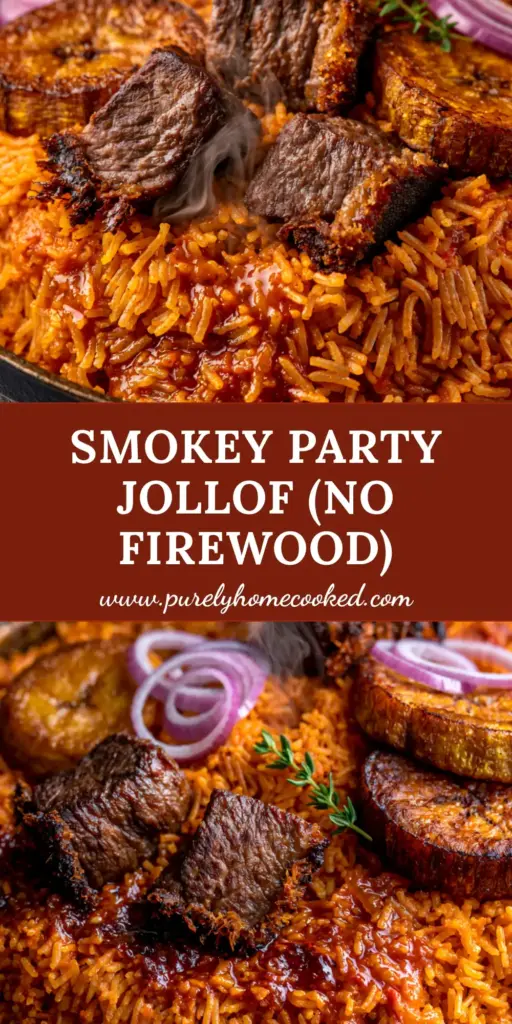
Bringing the authentic taste of Nigerian party jollof rice into your kitchen is a rewarding culinary journey. By focusing on the smoky char, the vibrant pepper reduction, and the perfectly seared beef, you create more than just a meal—you create an experience that stimulates all the senses. From the oily sheen on the long grains to the sweet crunch of caramelized plantains, every bite tells a story of tradition and celebration.
We invite you to share your results and tag us in your photos! If you enjoyed this deep-dive into West African flavors, please leave a comment below and share this recipe to Pinterest so others can join the Jollof revolution.