Experience the ethereal delight of a handcrafted Peach Mochi, a dessert that perfectly captures the essence of summer in a single, stretchy bite. This recipe yields a translucent, pale pink glutinous rice dough that envelops a vibrant, sun-ripened orange peach wedge, all cushioned by a thin, sweet layer of white bean paste. Each piece is finished with a velvety dusting of fine white starch and a tiny sprig of fresh mint for a professional, minimalist aesthetic.
Making mochi at home might seem intimidating, but the process is a beautiful culinary ritual that rewards patience with incredible textures. The contrast between the soft, pillowy skin and the juicy, dripping peach interior creates a sensory experience that store-bought versions simply cannot replicate. By following this guide, you will master the art of the “Daifuku” style mochi, ensuring a result that looks as stunning on a white ceramic plate as it does in a high-end Japanese confectionery.
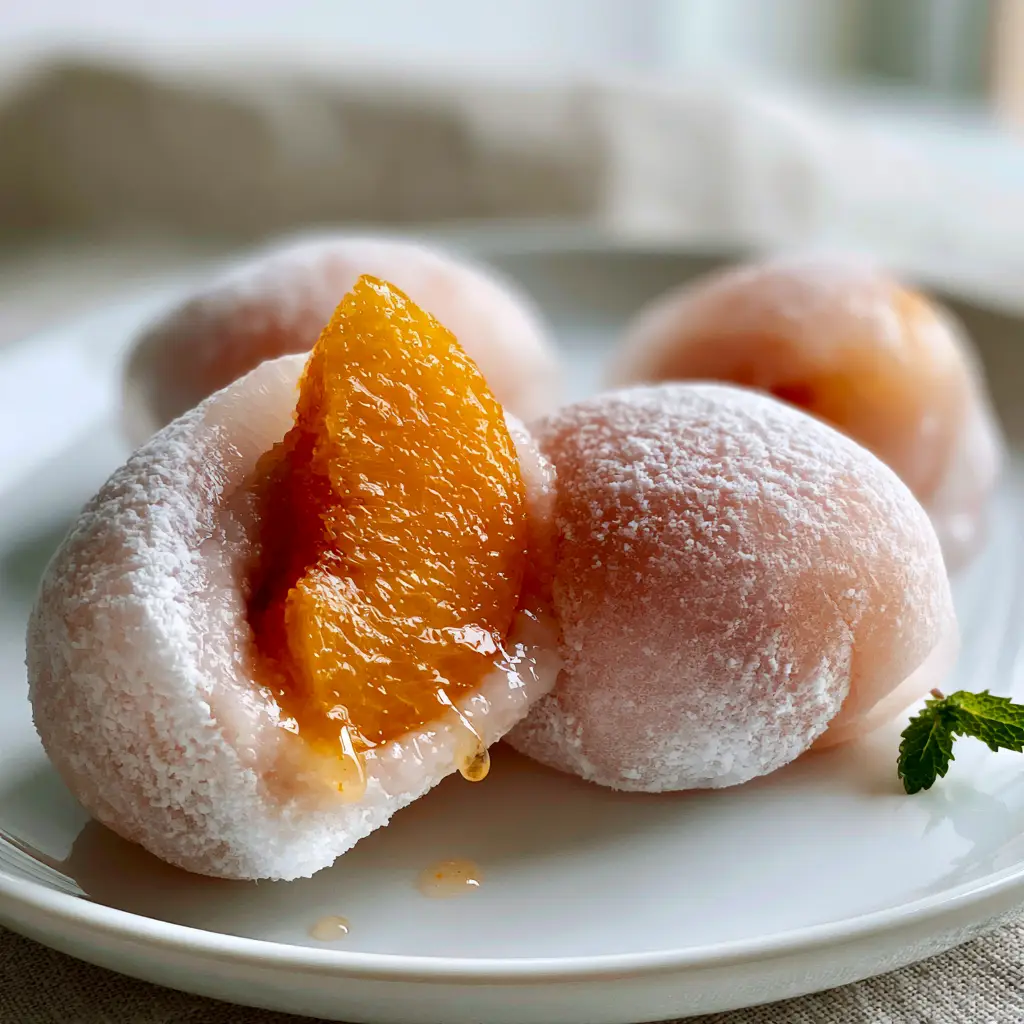
The Irresistible Appeal of Handcrafted Peach Mochi
- Sensory Textures: A delicate balance between the elastic, stretchy dough and the firm, juicy snap of a fresh peach wedge.
- Visual Elegance: A soft, translucent pink hue achieved through natural coloring, reminiscent of early morning light on an orchard.
- Sophisticated Sweetness: The thin layer of white bean paste (Shiroan) provides a mild, earthy sweetness that enhances rather than masks the fruit.
- Refreshing Finish: A fine dusting of cornstarch prevents sticking while adding a professional, matte “velvety” appearance.
The Essential Ingredients for Perfect Peach Mochi
To achieve the specific visual and structural results of this Peach Mochi, selecting the right ingredients is paramount. We aren’t just making a snack; we are engineering a delicate balance of moisture and elasticity.
Shiratamako or Mochiko (Glutinous Rice Flour): 1 cup (160g). This is the foundation of the pillowy pink dough; Shiratamako is preferred for its refined, smoother texture and superior elasticity.
Granulated Sugar: 1/4 cup (50g). Sugar does more than sweeten; it acts as a softener, keeping the rice dough tender and preventing it from hardening too quickly.
Filtered Water: 3/4 cup (180ml). Clean, filtered water ensures the color of the pink dough remains vibrant and translucent without interference from minerals.
Pink Food Coloring or Beet Juice: 1-2 drops. A tiny amount is needed to reach that specific “delicate, translucent pale pink” color described in our visual blueprint.
White Bean Paste (Shiroan): 1/2 cup (120g). This acts as a moisture barrier between the juicy peach and the dough, preventing the mochi from becoming soggy.
Fresh Peaches: 2 large, ripe peaches. Look for fruit that is fragrant and gives slightly to pressure; the wedges must be “vibrant and sun-ripened orange.”
Cornstarch or Potato Starch (Katakuriko): 1/2 cup (60g). Used for the “fine white starch dusting,” this is essential for handling the incredibly sticky dough without frustration.
Fresh Mint Sprigs: For garnish. A single tiny sprig provides a pop of green that contrasts beautifully against the pink mochi and white plate.
Professional Tools for Mochi Success
Achieving a professional finish requires a few specific kitchen essentials. While the dough is simple, the handling is technical, and these tools make all the difference.
A microwave-safe glass bowl or a traditional steamer is required to cook the glutinous rice flour until it reaches its signature translucent state. You will also need a silicone spatula, which is naturally non-stick and allows you to fold the dough effectively during the cooking process.
A large baking tray lined with parchment paper serves as your staging area for the starch dusting. Finally, a sharp paring knife is necessary to slice the peaches into clean, uniform wedges that fit perfectly inside the bean paste layer.

Mastering the Art: Step-by-Step Peach Mochi Instructions
Preparing the Juicy Peach Core
Begin by peeling your ripe peaches. If they are perfectly ripe, the skin should pull away easily with a knife; if not, a quick 30-second blanching in boiling water followed by an ice bath will do the trick. Slice the peaches into uniform wedges, ensuring each piece is thick enough to be “vibrant and juicy” but small enough to be fully enclosed.
Take a small amount of white bean paste (about 1 tablespoon or 15g) and flatten it into a thin disc in your palm. Place the peach wedge in the center and wrap the paste around it, leaving the ends slightly exposed if necessary. This thin layer is the secret to structural integrity; it traps the “small droplets of juice” inside so they don’t dissolve the rice dough.
Cooking the Pillowy Pink Dough
In your microwave-safe bowl, whisk together the glutinous rice flour, sugar, and water until no lumps remain. Add your pink coloring one drop at a time until you achieve a very faint, pale pink. Cover the bowl loosely with plastic wrap and microwave on high for 1 minute.
Remove the bowl and stir the mixture with a wet silicone spatula. The dough will look patchy—this is normal. Microwave for another 1 minute. The dough should now look translucent and feel incredibly stretchy. If it still looks white or opaque, give it one final 30-second burst. The visual cue for readiness is a uniform, semi-clear appearance and a thick, “pillowy” resistance when stirred.
The Velvety Starch Dusting and Shaping
Generously dust your work surface with cornstarch. Turn the hot dough out onto the starch. Dust the top of the dough as well; you cannot use too much starch at this stage, as you can brush the excess off later. Flatten the dough and cut it into equal portions using a bench scraper or a knife dusted in starch.
Take one portion of dough and flatten it into a circle. Place your bean-paste-wrapped peach in the center. Gently pull the edges of the dough up and over the filling, pinching the bottom to seal. The dough should be thin but strong. Immediately place the finished ball onto a minimalist white ceramic plate, seam-side down.
Expert Tips for Mochi Success
- Temperature Control: Work with the dough while it is still warm. Once the glutinous rice cools completely, it loses its “stretchy and pillowy” elasticity, making it difficult to seal.
- Anti-Stick Strategy: Keep your hands and tools well-dusted with starch. If the dough touches a dry spot on your skin, it will stick aggressively.
- Fruit Ripeness: If your peaches are overly watery, pat them dry with a paper towel before wrapping them in the bean paste to prevent “juice leakage” during the assembly.
- Coloring Cues: Always under-color your dough. The pink hue intensifies as the dough cooks and transitions from opaque to translucent.
Keeping Your Peach Mochi Fresh
Mochi is best enjoyed the day it is made to appreciate the maximum softness of the skin. If you must store them, place them in an airtight container at room temperature for up to 24 hours. Avoid the refrigerator if possible, as the cold temperature causes the rice starch to undergo retrogradation, turning the pillowy skin hard and crystalline.
If you have leftover peaches from this recipe, they make a fantastic addition to a Peach Lemonade Cocktail for a full summer spread. For those looking for savory ways to use summer produce, consider trying a Zucchini and Onion Pie or a hearty Zucchini Casserole for dinner.
What to Serve With This Summer Treat
This Peach Mochi is a light, refreshing dessert that pairs beautifully with a variety of textures. If you are hosting a brunch, serve these alongside a Fluffy Pancake Recipe to lean into the soft, cloud-like theme of the meal. For a movie night or a relaxed gathering, they fit right in with other creative sweet and salty snacks.
The minimalist presentation on a white ceramic plate makes this the perfect ending to a sophisticated meal. The subtle floral notes of the peach and the clean finish of the mint garnish provide a palate-cleansing effect that is highly desired after rich or spicy dishes.
Frequently Asked Questions
No, regular rice flour lacks the amylopectin required to create the signature stretchy and chewy texture of mochi. You must use glutinous rice flour, such as Shiratamako or Mochiko.
While optional, the white bean paste acts as a crucial moisture barrier. Without it, the juice from the fresh peach wedges will eventually dissolve the rice dough, making it soggy and messy.
Add your food coloring one tiny drop at a time to the liquid mixture before cooking. The color will darken slightly as the dough becomes translucent, so aim for a shade lighter than your target.
Fresh fruit mochi is best consumed within 24 hours. Because it contains fresh, juicy peaches, it has a shorter shelf life than mochi filled with dry pastes. Do not refrigerate, as the dough will become hard.
Mochi dough is naturally very sticky. Ensure you use an ample amount of cornstarch or potato starch on your hands and work surface. You can always brush off the excess once the mochi is shaped.
The Ultimate Recipe for Handcrafted Peach Mochi
Peach Mochi: The Ultimate Soft and Pillowy Summer Dessert Recipe
Ingredients
Equipment
Method
- Peel the fresh peaches and cut into uniform wedges. Ensure they are ripe and juicy.
- Take 1 tablespoon of white bean paste, flatten it, and wrap it thinly around each peach wedge.
- Whisk rice flour, sugar, water, and pink coloring in a glass bowl until smooth.
- Microwave for 1 minute, stir with a wet spatula, then microwave for another 1-2 minutes until the dough is translucent and stretchy.
- Turn dough onto a starch-dusted surface. Divide into 6 equal portions.
- Flatten dough, place the peach core in the center, and pinch the bottom to seal. Garnish with a sprig of mint.
Notes
Pat the peach wedges dry if they are excessively juicy to prevent the dough from getting soggy.

Closing & Call to Action
Mastering the Peach Mochi is a milestone for any home cook looking to explore the delicate world of Japanese-inspired sweets. The combination of the “velvety white” exterior and the “vibrant orange” interior creates a visual masterpiece that tastes even better than it looks. We would love to see your creations! Please leave a comment below with your results and share your beautiful mochi plates with us on Pinterest.