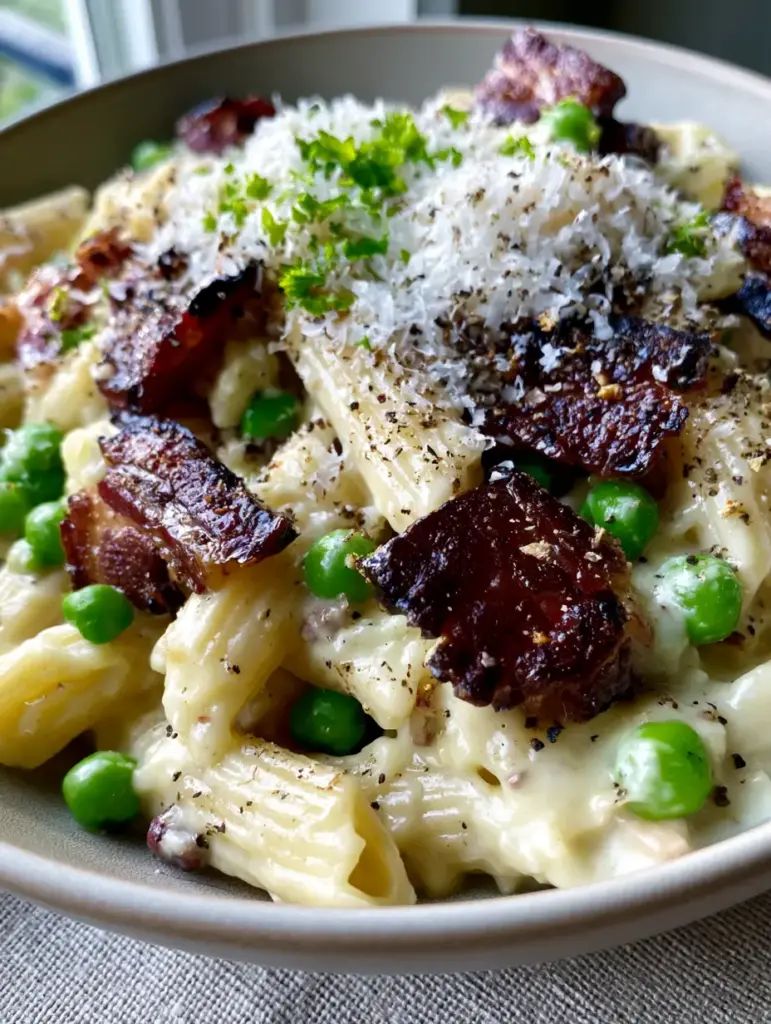
There is a specific kind of culinary magic that happens when salty, smoke-cured pork meets the popping sweetness of spring vegetables. This Bacon and Pea Pasta is not just a quick weeknight meal; it is a masterclass in textural contrast and flavor balancing. Imagine ridges of perfectly al dente penne pasta, each tube meticulously coated in a thick, glossy, ivory-colored velvet cream sauce that clings to every surface.
As you dive into the bowl, you are greeted by oversized, thick-cut bacon chunks boasting deep mahogany charred edges that provide a rhythmic crunch against the tender pasta. Nestled in the folds of the sauce are plump, vibrant emerald green sweet peas that burst with fresh juice in every bite. Topped with a snowy mound of micro-planed pecorino romano and the sharp bite of coarse cracked black pepper, this dish is a sensory powerhouse.
Whether you are looking for a comforting soul-warmer or a dish elegant enough for a dinner party, this recipe delivers professional-grade results from a single skillet. Much like our fan-favorite creamy cajun chicken penne pasta, this dish relies on a high-quality emulsion to create that restaurant-quality mouthfeel that keeps you coming back for more.
Why This Creamy Pasta Symphony Works Every Single Time
- The Mahogany Lardon Factor: By using thick-cut bacon and rendering it slowly before a high-heat finish, we achieve a specific “mahogany” char that adds smoky depth and a crucial textural snap.
- Velvet Sauce Technology: We don’t just add cream; we build a glossy emulsion using heavy cream, pasta water, and finely grated cheese to ensure the sauce never breaks or becomes greasy.
- Vibrant Color Contrast: The visual appeal of emerald green peas against an ivory sauce and dark mahogany bacon creates a high-end aesthetic inspired by professional food photography.
- Pecorino Punch: Unlike milder cheeses, the micro-planed pecorino romano adds a sharp, salty tang that cuts through the richness of the heavy cream and bacon fat.
- Penne Rigate Precision: Using ridged pasta (rigate) is a strategic choice, as the grooves act as “sauce traps” to ensure no drop of the velvet cream is left behind on the plate.
The Anatomy of Ingredients for the Ultimate Bacon and Pea Pasta
Penne Rigate (450g / 1 lb): Choose a high-quality bronze-cut pasta if possible. The rougher surface area allows the cream sauce to grip the pasta more effectively than smooth varieties.
Thick-Cut Bacon (225g / 8 oz): You want lardons that are roughly 1/2 inch thick. This thickness allows the exterior to reach that mahogany charred state while the center remains slightly chewy and tender.
Sweet Green Peas (225g / 1.5 cups): While fresh are lovely, high-quality frozen “petite” peas often retain a more vibrant emerald color and a consistent snap after a light steam or quick toss in the sauce.
Heavy Cream (360ml / 1.5 cups): To achieve the “velvet” texture described in our visual blueprint, full-fat heavy cream is essential for its stability and luxurious mouthfeel.
Pecorino Romano (60g / 1 cup, micro-planed): This sheep’s milk cheese is saltier and punchier than Parmesan. Micro-planing it creates a “snowy mound” effect that melts instantly into the hot sauce.
Fresh Parsley (15g / 1/4 cup): Finely minced bright green parsley provides a necessary hit of herbaceous freshness to lift the heavier fat profiles of the dish.
Coarse Black Pepper: Don’t use pre-ground pepper here. You want large, jagged flakes of freshly cracked pepper to provide a floral heat that pierces through the cream.
Pasta Water (120ml / 0.5 cup): This is your “liquid gold.” The starch in the water acts as a bridge, helping the fat in the cream and bacon bond with the pasta starch for a seamless sauce.
Essential Kitchen Tools for Professional Execution
To achieve the specific visual results seen in our macro photography, you will need a few specific tools. A large heavy-bottomed skillet or cast iron pan is vital for getting that deep mahogany sear on the bacon without burning the pan drippings.
For the cheese, a Microplane grater is non-negotiable. It produces the ethereal, light-as-air cheese shavings that create the “snowy mound” look. Standard box graters produce shreds that are too heavy and won’t emulsify as smoothly into the sauce.
Finally, a sturdy pasta tong or spider strainer is helpful for moving the penne directly from the boiling water into the skillet, bringing along that essential starchy water needed for the sauce’s glossy finish.
Mastering the Mahogany Char: How to Prepare the Bacon Lardons
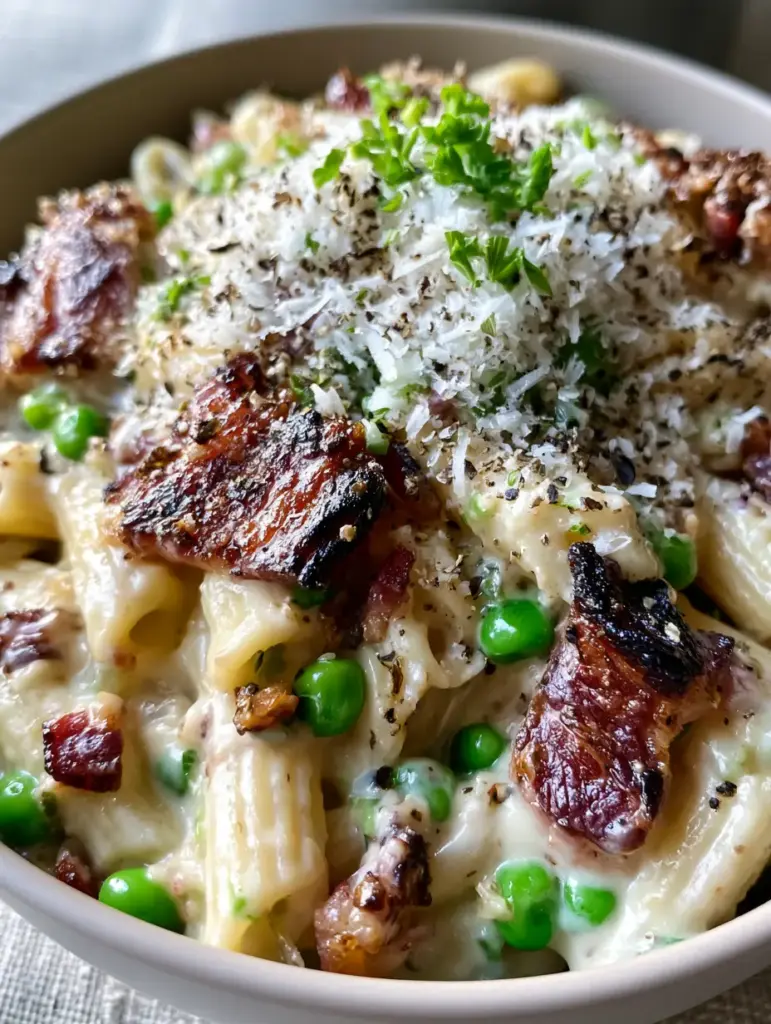
The foundation of this Bacon and Pea Pasta lies in how you handle the pork fat. Begin by slicing your thick-cut bacon into uniform batons, known in French cooking as lardons. Start them in a cold skillet over medium heat.
Starting with a cold pan allows the fat to render out slowly, which prevents the bacon from curling and ensures the edges become crispy and mahogany-colored rather than just burnt. As the fat pools, the bacon will essentially “fry” in its own liquid gold.
Once the bacon has reached a deep, dark red hue with visible charring on the tips, remove it with a slotted spoon. Leave about two tablespoons (30ml) of the rendered fat in the pan—this is the flavor base for our ivory velvet sauce.
The Science of the Glossy Velvet Cream Sauce
After rendering the bacon, reduce the heat to medium-low. Add the heavy cream to the skillet, scraping up the brown bits (fond) from the bottom of the pan. These bits contain concentrated smoky flavor that will infuse the sauce with an ivory-tan depth.
The “velvet” texture comes from the slow reduction of the cream combined with the addition of starchy pasta water. As the cream simmers, it thickens. When you add the al dente penne and a splash of pasta water, the starch acts as an emulsifier.
This process is similar to how we achieve the perfect coating in our creamy lemon garlic pasta. The goal is a sauce that looks glossy and mirror-like, not thick and pasty. If the sauce looks too thick, add another tablespoon of pasta water until it flows like liquid silk.
Achieving the Perfect Al Dente Penne
Cook your penne in highly salted water (it should taste like the sea). Boil the pasta for exactly 2 minutes less than the package directions indicate. The pasta will finish cooking inside the cream sauce, absorbing the flavors of the bacon and cream.
This “finish-in-the-pan” method is the secret to why restaurant pasta tastes better. The penne acts like a sponge, drawing the sauce into its core, ensuring every bite is seasoned from the inside out.
Preserving the Emerald Snap of the Peas
To maintain the “vibrant emerald green” look from our visual prompt, do not overcook the peas. If using frozen peas, add them to the skillet in the final 60 seconds of cooking. They only need enough heat to thaw and “pop.”
Overcooked peas turn a dull army-green and become mushy. By adding them at the very end, you preserve their structural integrity and their bright, sweet contrast to the smoky bacon lardons.
Expert Tips for Sensory Perfection
- Listen to the Sizzle: When searing the bacon, listen for a steady, rhythmic sizzling sound. If it starts to “pop” aggressively, the heat is too high; if it’s silent, the heat is too low.
- The Coating Check: To see if your sauce is the right consistency, dip a wooden spoon into the sauce. Run your finger down the back of the spoon; if the line stays clear and the sauce doesn’t run, it’s perfectly “velvet.”
- The “Snowy” Topping: Always grate your Pecorino Romano directly over the bowl just before serving. This preserves the delicate structure of the micro-planed cheese.
- Peppery Punch: Adjust your pepper grinder to its coarsest setting. Large flakes of pepper provide bursts of flavor that complement the smoky bacon better than fine dust.
Storage, Reheating, and Make-Ahead Advice
Bacon and Pea Pasta is best enjoyed immediately while the emulsion is at its peak. However, if you have leftovers, store them in an airtight container in the refrigerator for up to 3 days.
When reheating, cream-based sauces tend to “tighten up” or break. To restore the velvet texture, add a splash of milk or water to the pasta before microwaving or heating on the stovetop. Stir gently to re-emulsify the sauce.
We do not recommend freezing this dish, as the cream sauce can separate and become grainy upon thawing. If you are a fan of make-ahead pasta bakes, you might prefer our tuna pasta bake recipe which holds up better to freezing.
What to Serve with This Luxurious Pasta
Because this Bacon and Pea Pasta is rich and savory, it pairs beautifully with light, acidic side dishes that cleanse the palate. A crisp salad or a vinegar-based side is the perfect companion.
Consider serving it alongside our cucumbers and onions in vinegar for a sharp, refreshing contrast. If you want more vegetables, a side of skillet zucchini and mushrooms adds an earthy element that complements the sweet peas.
For a complete Italian-inspired feast, a piece of crusty garlic bread is essential for mopping up any leftover ivory sauce at the bottom of the bowl.
Frequently Asked Questions
You can, but Pecorino Romano is recommended for its sharper, saltier profile which provides a necessary contrast to the rich cream and sweet peas.
Yes, frozen peas are actually preferred for this recipe as they retain their vibrant emerald green color and ‘snap’ better than fresh peas during the quick finishing process.
Use full-fat heavy cream and emulsify it with starchy pasta water. Adding the cheese off the heat or at very low heat also prevents the proteins from clumping and the sauce from becoming oily.
Start the lardons in a cold skillet over medium heat. This renders the fat slowly, allowing the bacon to fry in its own grease until it reaches a deep mahogany char.
The ‘rigate’ or ridges on the pasta act as grooves that capture and hold the thick velvet cream sauce, ensuring you get the maximum amount of sauce in every bite.
The Definitive Bacon and Pea Pasta Recipe
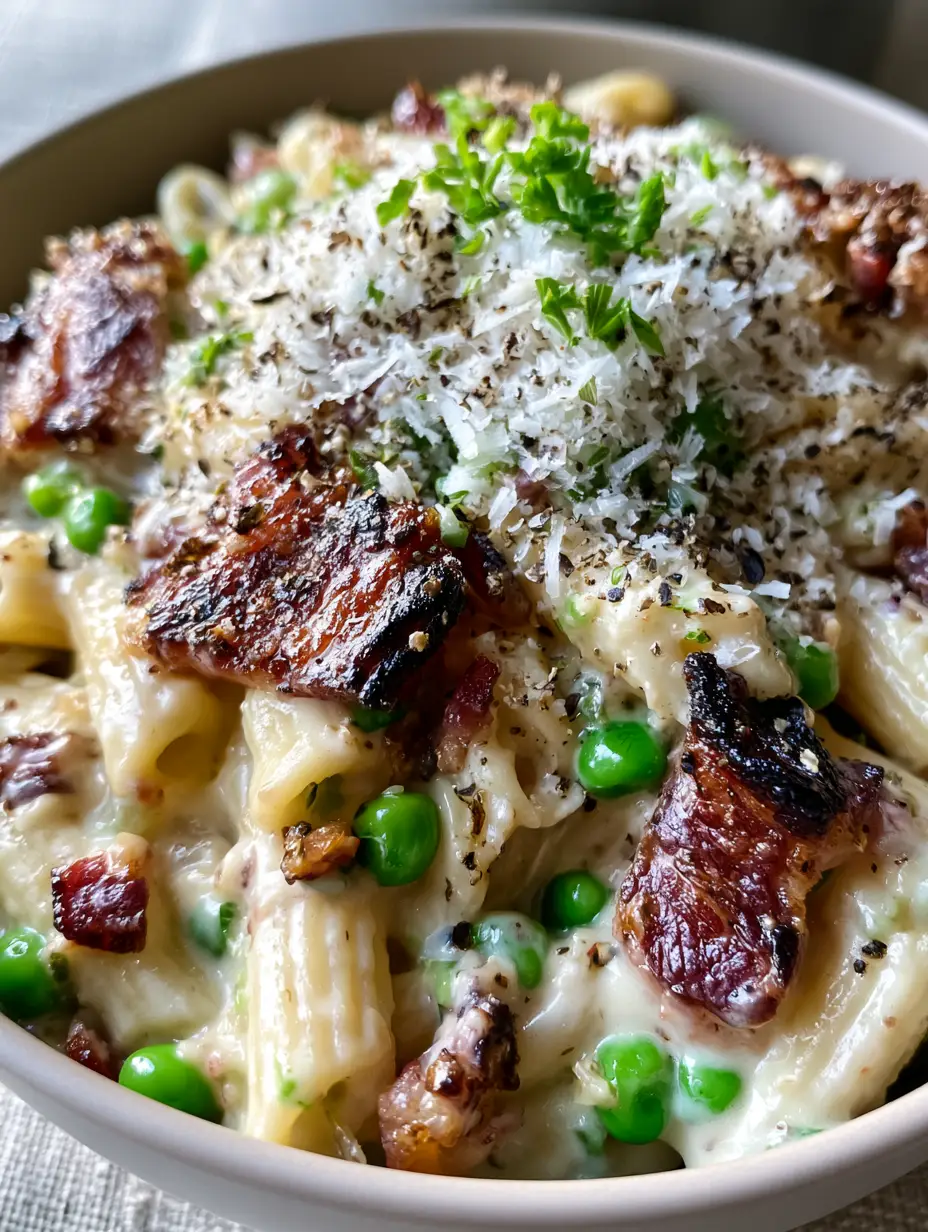
Bacon and Pea Pasta with Velvet Cream Sauce and Crispy Lardons
Ingredients
Equipment
Method
- Bring a large pot of salted water to a boil. Add penne and cook for 2 minutes less than the box instructions. Reserve 1/2 cup (120ml) of pasta water before draining.
- Add bacon lardons to a cold skillet. Turn heat to medium and cook until fat is rendered and edges are mahogany charred and crispy (about 8-10 mins). Remove bacon with a slotted spoon; keep 2 tbsp of fat in the pan.
- Reduce heat to medium-low. Pour in heavy cream, scraping the bottom of the pan to release the bacon flavor. Simmer for 3-4 minutes until slightly thickened.
- Add the al dente penne, peas, and reserved pasta water to the skillet. Toss vigorously for 1-2 minutes until the sauce becomes a glossy, thick velvet coating.
- Fold in half the Pecorino. Serve in shallow bowls, topped with the crispy bacon, a snowy mound of remaining Pecorino, coarse black pepper, and minced parsley.
Notes
Always use freshly cracked black pepper for the most vibrant flavor contrast.
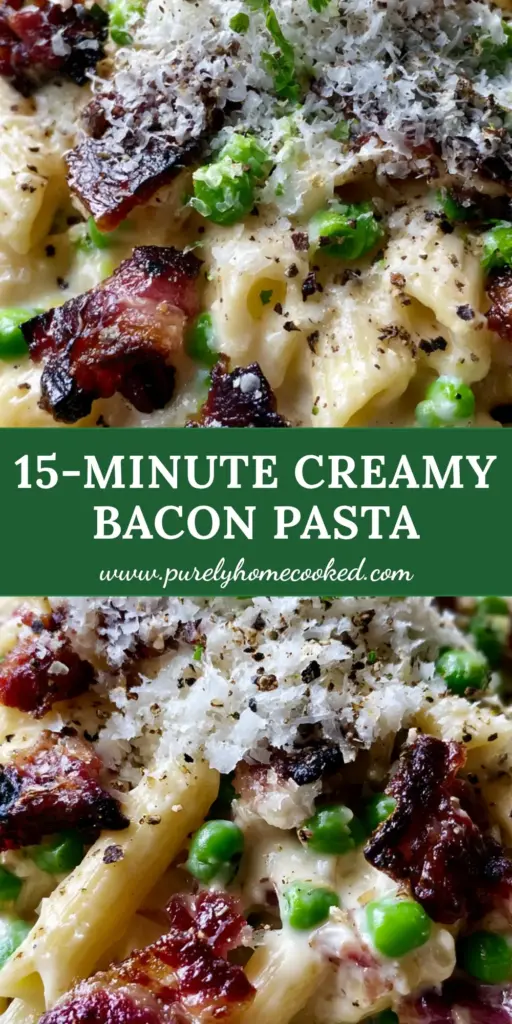
Bringing the Restaurant Experience Home
The beauty of this Bacon and Pea Pasta lies in its sophisticated simplicity. By focusing on the “Forensic Visuals”—the mahogany char of the bacon, the emerald pop of the peas, and the ivory velvet of the sauce—you transform basic pantry staples into a gourmet experience.
We invite you to try this recipe and see the difference that professional techniques like fat rendering and starch emulsification can make. Your kitchen will smell incredible, and your plate will look like it came straight from a professional photo shoot.
If you enjoyed this recipe, please leave a comment below and let us know how your mahogany lardons turned out! Don’t forget to follow us on Pinterest and share your creations with the Purely Home Cooked community!