There is a specific kind of magic that happens when four humble ingredients collide in a matte black ceramic bowl. The authentic Italian Carbonara is not just a meal; it is a masterclass in culinary emulsion and texture management.
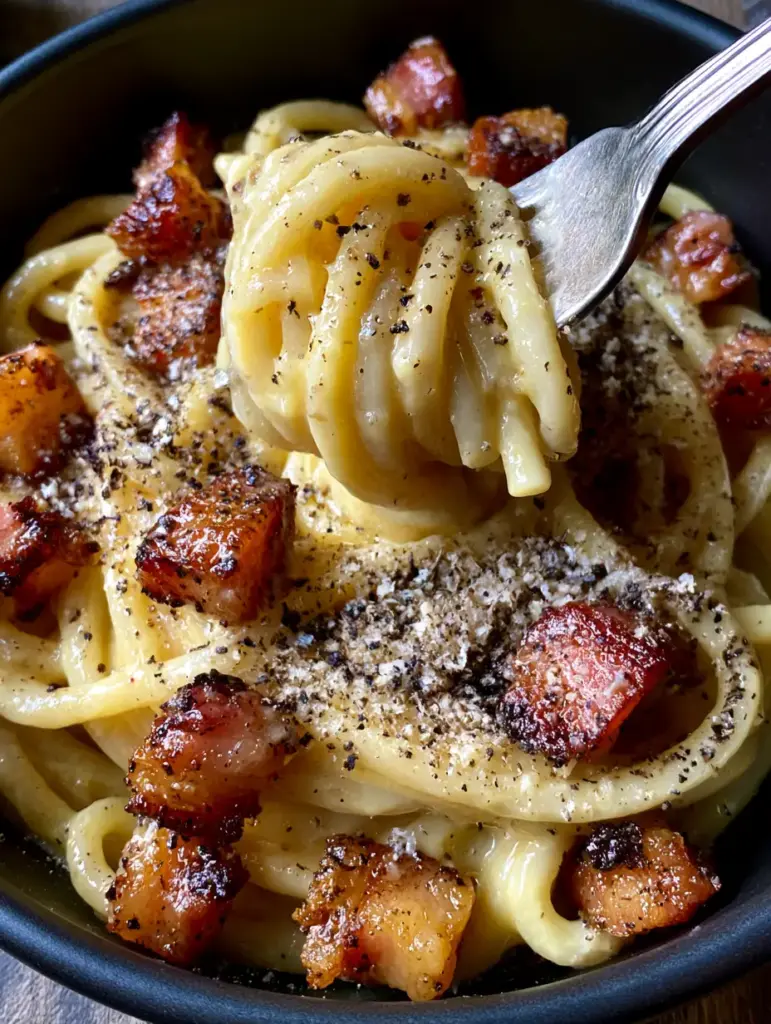
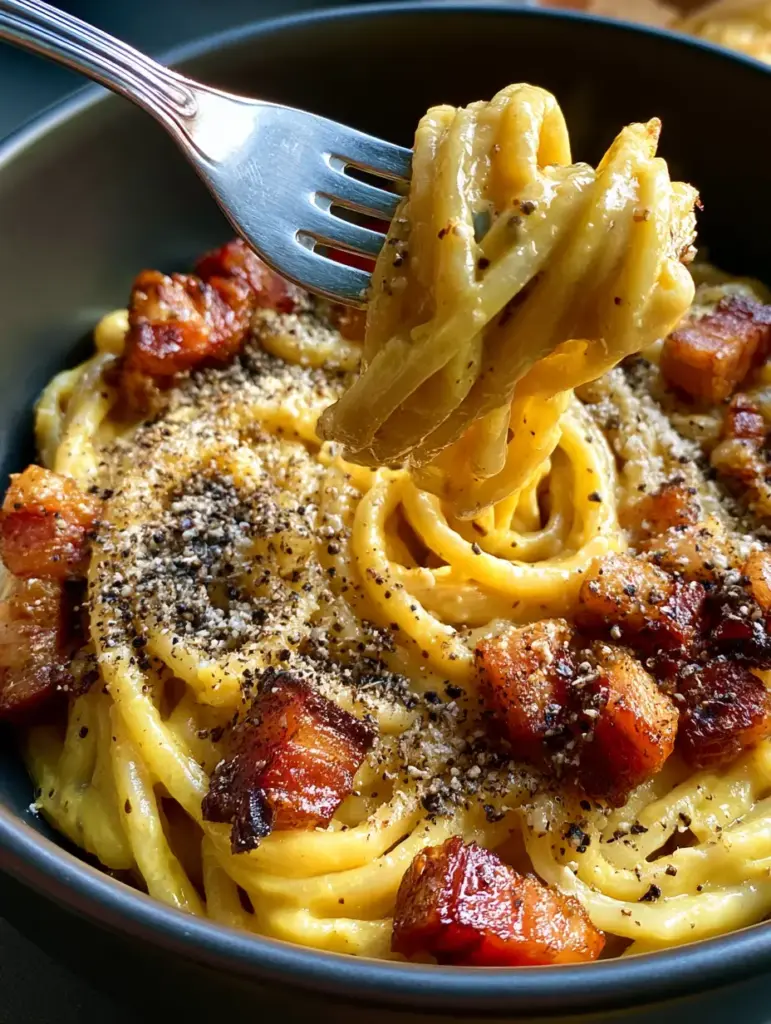
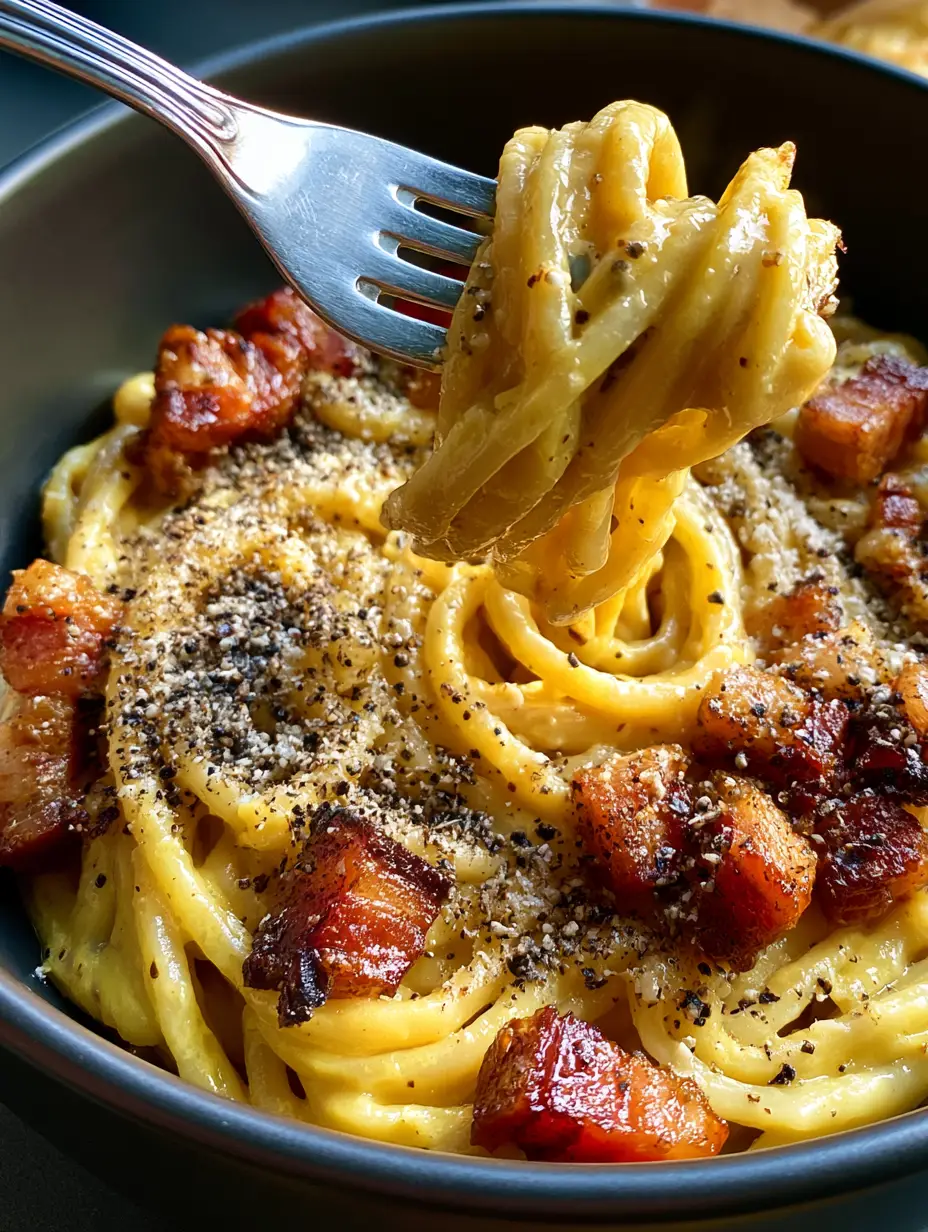
Imagine thick, al dente spaghetti strands perfectly coated in a luminous, glossy, pale-yellow egg and pecorino emulsion. Each bite offers the crunch of golden-brown, crispy fried guanciale cubes, releasing glistening rendered fat that coats the palate.
This recipe focuses on the forensic details—the heavy sprinkle of coarsely cracked black pepper and the fine dusting of freshly grated Pecorino Romano cheese. We are moving away from the “creamy” imposters and returning to the silkiness that only high-quality eggs and technique can provide.
The Visual Chemistry of the Perfect Roman Emulsion
Achieving that signature “luminous” glow seen in high-end food photography requires understanding the science of protein and fat. When you look at a professional plate of Italian Carbonara, you notice the sauce isn’t thick or gloopy; it is a fluid, glistening bunch of noodles.
The secret lies in the temperature of the pasta water and the timing of the “mantecatura” (the tossing process). If the heat is too high, you get scrambled eggs; too low, and the cheese won’t melt into the yolks.
We are aiming for a texture so silky that when you perform a fork-twirl, the sauce clings to the spaghetti without a single clump. This is the hallmark of an elite home cook who understands the Roman tradition.
Essential Components for Authentic Italian Carbonara Success
- Bronze-Die Spaghetti: Look for “thick” spaghetti (often labeled Spaghettoni) with a rough surface. This texture is vital because it creates the “grip” necessary for the egg emulsion to cling to every millimeter of the noodle.
- Guanciale (Cured Pork Cheek): This is non-negotiable for the visual and flavor profile. Guanciale provides the glistening rendered fat and the deep, funky saltiness that pancetta or bacon simply cannot replicate.
- Pecorino Romano: Use a high-quality, aged wedge and grate it finely. The fine dusting ensures it melts instantly into the egg yolks, creating that pale-yellow, luminous sauce.
- Fresh Egg Yolks: The “luminous” color comes almost entirely from the yolks. Using high-quality, pasture-raised eggs will yield a deeper, more vibrant yellow sauce that looks stunning against a dark bowl.
- Coarsely Cracked Black Pepper: Do not use pre-ground pepper. You need the visual impact of large, jagged shards and the floral heat that only comes from freshly crushed peppercorns.
The Invisible Foundations of a Structural Sauce
While the blueprint lists the stars, every great Italian Carbonara relies on “invisible” ingredients like high-quality sea salt. Salt is used exclusively in the pasta water to season the spaghetti from the inside out, as the sauce itself is naturally salty from the cheese and pork.
Pasta water is your most important tool; it is the liquid gold that transforms a dry bowl of noodles into a cohesive masterpiece. The starch in the water acts as a bridge between the rendered guanciale fat and the egg yolks.
If you find yourself craving a lighter meal the next day, you might consider our refreshing cucumber onion salad to balance the richness of this decadent pasta. Or, if you’re looking for more Italian-inspired comfort, our savory zucchini onion pie offers a beautiful vegetable-forward alternative.
Step-by-Step Mastery: Achieving the Golden Twirl
1. Rendering the Guanciale to Glistening Perfection
Start by cutting 5 oz (140g) of guanciale into 1/2-inch cubes. Place them in a cold skillet and turn the heat to medium-low, allowing the fat to render slowly.
Watch for the visual cue: the cubes should transform from opaque white to a translucent, golden-brown hue. They should be crispy on the exterior but still possess a slightly chewy, fatty heart.
2. Preparing the Egg and Pecorino Base
In a small bowl, whisk together 4 large egg yolks and 1 whole egg with 1.5 cups (150g) of finely grated Pecorino Romano. The mixture should form a thick, pale paste.
Add a generous amount of your coarsely cracked black pepper directly into this paste. This allows the oils in the pepper to begin blooming before they even hit the heat of the pasta.
3. The Al Dente Boil
Boil 1 lb (454g) of thick spaghetti in a pot of highly salted water. Aim for “al dente”—the pasta should have a firm bite, as it will continue to cook slightly in the skillet.
Before draining, reserve at least 1 cup (240ml) of the starchy pasta water. This is your insurance policy for a glossy, non-scrambled finish.
4. The Mantecatura (The Emulsion Phase)
Drain the pasta and add it directly to the skillet with the crispy guanciale and its rendered fat. Toss over medium heat for 30 seconds to coat the strands.
Remove the skillet from the heat entirely—this is the most critical step. Wait 20 seconds for the temperature to drop slightly, then pour in the egg and cheese mixture while whisking or tossing vigorously.
Slowly drizzle in small splashes of pasta water. Watch as the “luminous, pale-yellow” sauce forms before your eyes, coating the noodles in a silky, glistening sheen.
Expert Tips for a Non-Scrambled Masterpiece
- Residual Heat Only: Never add the egg mixture while the pan is still on the burner. The residual heat of the pasta and the pan is more than enough to cook the eggs into a safe, silky sauce.
- The “Wedge” Grate: Grate your cheese so finely it looks like snow. Large clumps of cheese will not emulsify and will lead to a grainy texture.
- Pepper Toasting: For an even deeper flavor, toast your whole peppercorns in a dry pan for 2 minutes before coarsely cracking them.
- Pasta Choice: If you cannot find Spaghettoni, use Bucatini. The hollow center carries even more of that glorious egg emulsion.
Serving Suggestions and Perfect Pairings
Italian Carbonara is a heavy, rich dish that benefits from a bright or crisp side. A simple green salad or our crispy sheet pan asparagus provides a much-needed textural contrast.
If you are hosting a multi-course Italian night, you might start with a light appetizer like our cucumbers and onions in vinegar to cleanse the palate before the main event. For those who prefer a bit of variety, serving this alongside a cheesy zucchini casserole can round out the meal beautifully.
Frequently Asked Questions
While you can use thick-cut bacon or pancetta, guanciale is preferred for its higher fat content and specific curing spices. If using bacon, choose a non-smoked variety to stay closer to the authentic flavor profile.
Absolutely not. Authentic Italian Carbonara achieves its glossiness through the emulsion of egg yolks, finely grated Pecorino Romano, and starchy pasta water. Cream actually dulls the sharp, salty flavor of the guanciale and cheese.
Thick spaghetti (Spaghettoni) or Bucatini are the best choices. Their larger surface area and internal holes (in the case of Bucatini) help the thick egg and cheese emulsion cling to the pasta more effectively.
The pan was likely too hot when you added the egg mixture. Always remove the skillet from the heat source and let it sit for 20 seconds before adding the eggs, relying solely on the residual heat of the pasta to cook the sauce.
Yolks contain the fats and lecithin necessary to create a rich, stable emulsion. Using mostly yolks results in that signature luminous, pale-yellow color and a silkier mouthfeel than whole eggs.
Authentic Roman Italian Carbonara Recipe Card
Follow these precise measurements and the visual cues described above to recreate the macro-perfect pasta from the photos. This recipe serves 4 people and focuses on the traditional Roman method.
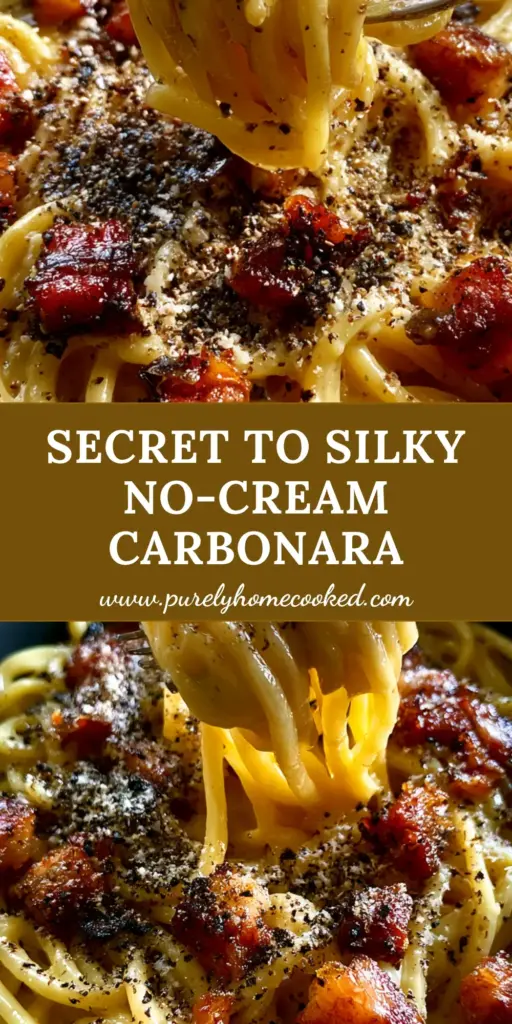
Italian Carbonara: The Definitive Guide to Authentic Roman Perfection
Ingredients
Equipment
Method
- Place guanciale cubes in a cold skillet over medium-low heat. Cook until the fat is glistening and the cubes are golden-brown and crispy, about 8-10 minutes.
- In a bowl, combine egg yolks, whole egg, finely grated Pecorino, and cracked pepper. Whisk into a thick, uniform paste.
- Cook spaghetti in salted boiling water until al dente. Reserve 1 cup (240ml) of starchy water before draining.
- Add pasta to the guanciale skillet. Remove from heat. Quickly stir in the egg mixture and splashes of pasta water until a luminous, pale-yellow sauce forms.
Notes
Ensure the cheese is grated finely to allow for a smooth emulsion.
Closing & Call to Action
Mastering the Italian Carbonara is a rite of passage for every home cook. When you achieve that perfect, glistening bunch of noodles lift with your fork, you’ve reached the pinnacle of pasta technique.
Did your sauce come out perfectly glossy? We want to hear about your success! Leave a comment below or share your “golden twirl” photos with us. Be sure to follow us on Pinterest for more authentic Italian recipes and culinary deep-dives.