Sheet pan asparagus is the ultimate weeknight side dish that bridges the gap between elegant gourmet dining and effortless home cooking. When you roast these vibrant emerald spears at high heat, they transform into tender-crisp delights with signature charred, crispy tips that snap with flavor.
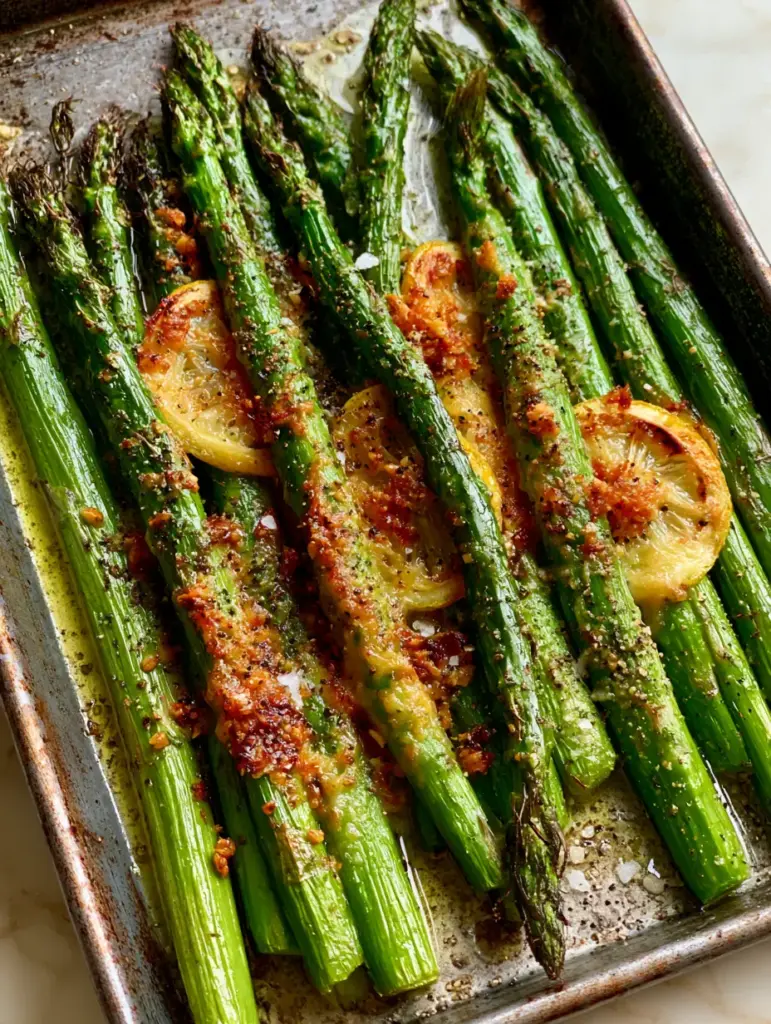
The secret to this specific recipe lies in the forensic layers of texture: the golden-brown toasted parmesan cheese, the pungent caramelized minced garlic, and the bright, jammy citrus of roasted lemon slices. Each spear is meticulously coated in glistening extra virgin olive oil to ensure maximum heat conduction and a luxurious mouthfeel.
Whether you are preparing a quick holiday meal or a simple Tuesday dinner, this sheet pan asparagus delivers a restaurant-quality visual and flavor profile that pairs perfectly with everything from seafood to hearty steaks. Let’s dive into the science of achieving that perfect roasted crunch without ever resulting in soggy vegetables.
Why This Crispy Roasted Asparagus Recipe Works Every Single Time
- Textural Contrast: You get a satisfying crunch from the toasted parmesan crust and crispy tips, while the interior remains succulent and tender.
- Visual Vibrancy: The combination of emerald green spears against charred lemon rounds creates a high-end food blog aesthetic that looks as good as it tastes.
- Umami Bomb: Caramelized minced garlic combined with aged parmesan provides a deep, savory profile that balances the natural sweetness of the roasted vegetable.
- One-Pan Simplicity: By utilizing a dark, weathered metal sheet pan, you maximize heat absorption for superior browning with minimal cleanup required.
Essential Components for the Perfect Garlic Parmesan Coating
1 lb (454g) Fresh Asparagus: Look for medium-thickness spears for the best ratio of charred exterior to tender interior. Avoid very thin “pencil” asparagus as they can overcook before the garlic caramelizes.
3 tbsp (45ml) Extra Virgin Olive Oil: The fat acts as the primary heat conductor, ensuring the heat from the sheet pan translates into a glistening, roasted finish rather than a steamed one.
4 cloves (20g) Fresh Garlic: Mincing the garlic finely allows it to cling to the stalks and caramelize into sweet, golden bits during the roasting process.
1/2 cup (45g) Freshly Grated Parmesan Cheese: Using high-quality, aged parmesan provides the protein and fat necessary to form that thick, uneven golden-brown crust described in our visual blueprint.
1 Large Lemon: Sliced into thin rounds, the lemons lose their sharp acidity and become mellow and charred, with glistening pulp that can be squeezed over the finished dish.
1 tsp (6g) Coarse Sea Salt Flakes: These provide a targeted burst of salinity and a sophisticated visual garnish that complements the cracked pepper.
1/2 tsp (2g) Fresh Cracked Black Pepper: Large grains of pepper add a floral heat and a heavy visual dusting that contrasts beautifully with the green stalks.
Professional Tools for High-Heat Roasting
To achieve the specific “macro shot” results seen in our visuals, you need a dark, weathered metal sheet pan. Darker pans absorb more radiant heat, which is essential for creating those slightly charred, crispy tips and browning the cheese.
A sharp chef’s knife is non-negotiable for creating thin, uniform lemon rounds and finely mincing the garlic. You will also want a microplane or fine grater for the parmesan to ensure it melts and toasts evenly across the uneven surface of the asparagus spears.
Architecting the Perfect Sheet Pan Asparagus: Step-by-Step
Preparing the Spears for Maximum Surface Area
Start by washing your asparagus in cold water and drying it thoroughly with a lint-free towel. Any residual moisture will create steam in the oven, preventing the parmesan from forming a crust and the tips from becoming crispy.
Snap off the woody ends by finding the natural breaking point of each spear, usually about 1 to 2 inches (2.5 to 5 cm) from the bottom. This ensures every bite is tender and free of tough fibers.
Mastering the Oil and Garlic Emulsion
In a small bowl, whisk together the extra virgin olive oil and the minced garlic. By pre-mixing these, you ensure that every spear is evenly coated in garlic aromatics rather than having clumps of garlic in just one corner of the pan.
Arrange the asparagus in a single layer on your dark metal sheet pan. Pour the oil-garlic mixture over the spears and use your hands to massage the oil into the stalks, ensuring the tips are well-lubricated for charring.
Layering Textures: Parmesan and Lemon Placement
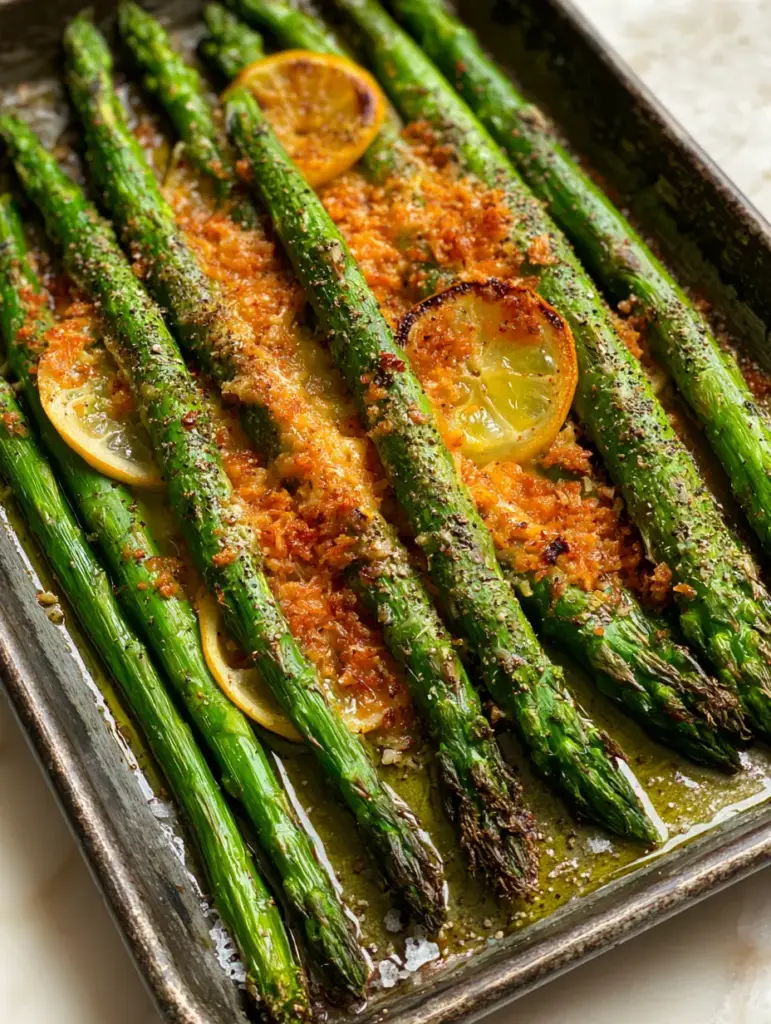
Nestle the thin lemon rounds between the asparagus spears, ensuring they make direct contact with the metal pan. This contact is what creates those beautiful charred edges and glistening, roasted pulp.
Dust the parmesan cheese over the top of the spears in a thick, intentionally uneven coating. This creates the “clinging” effect of golden-brown bits that adds both visual depth and flavor complexity to the finished sheet pan asparagus.
The Roasting Process and Sensory Cues
Slide the pan into a preheated oven at 425°F (220°C). Watch for the first sensory cue: the smell of toasted cheese and mellowing garlic filling the kitchen after about 8 minutes.
Roast for 12-15 minutes total. You are looking for a specific visual change: the tips of the asparagus should turn a dark, weathered green-brown, and the parmesan should be bubbling and golden. The lemon rounds should show distinct blackened edges on the rinds.
Expert Tips for Culinary Success
- The Single Layer Rule: Never overlap your asparagus. Overcrowding leads to steaming, which ruins the “emerald green” vibrancy and creates a limp texture.
- Temperature Control: If your oven runs cool, don’t be afraid to use the broiler for the last 60 seconds to achieve that precise golden-brown parmesan crust.
- Freshness Matters: Use a block of parmesan and grate it yourself. Pre-shredded cheese is coated in potato starch, which prevents it from melting into the stalks and forming that signature clinging texture.
- Wait for the Salt: While you season before roasting, adding an extra pinch of coarse sea salt flakes right before serving adds a professional “finishing touch” that sparkles under natural light.
Practical Storage and Reheating Methods
Roasted asparagus is best enjoyed immediately to preserve the crispness of the tips. However, if you have leftovers, store them in an airtight glass container in the refrigerator for up to 3 days.
To reheat, avoid the microwave, which will make the parmesan soggy and the asparagus rubbery. Instead, place the spears back on a sheet pan and heat in a 400°F (200°C) oven or an air fryer for 3-4 minutes until the cheese sizzles again.
What to Serve with Your Roasted Asparagus
This versatile side dish complements a wide variety of proteins. For a high-protein, low-carb dinner, serve these spears alongside pan-seared tuna steaks or a delicate piece of pan-seared rainbow trout.
If you are looking for a more casual meal, the garlic and parmesan notes pair beautifully with a honey garlic beef rice bowl or even as a green side for a Korean steak sandwich. For a vegetarian feast, serve it with slow cooker baby potatoes to round out the plate.
Frequently Asked Questions
High heat is essential for roasting. 425°F (220°C) is the sweet spot that allows the exterior to char and the cheese to brown before the interior becomes overcooked and mushy.
It is not recommended. Pre-shredded cheese contains anti-caking agents like potato starch that prevent it from melting and clinging to the asparagus stalks properly.
The most important factor is drying the asparagus completely after washing. Any water left on the spears will create steam in the oven, leading to a soft texture instead of a crisp roast.
For medium-thickness spears, peeling is unnecessary. Simply snap off the woody ends. If you have exceptionally thick stalks, you can peel the bottom third to ensure even cooking.
Dark metal pans absorb more heat than light, shiny aluminum ones. This extra heat is what creates the charred tips and the deep golden-brown color on the parmesan and garlic.
The Ultimate Sheet Pan Asparagus Recipe
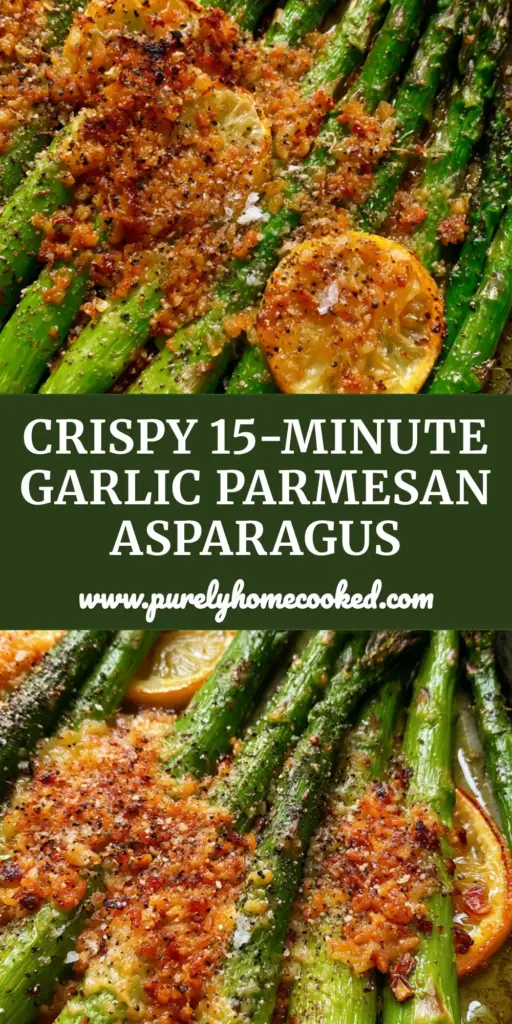
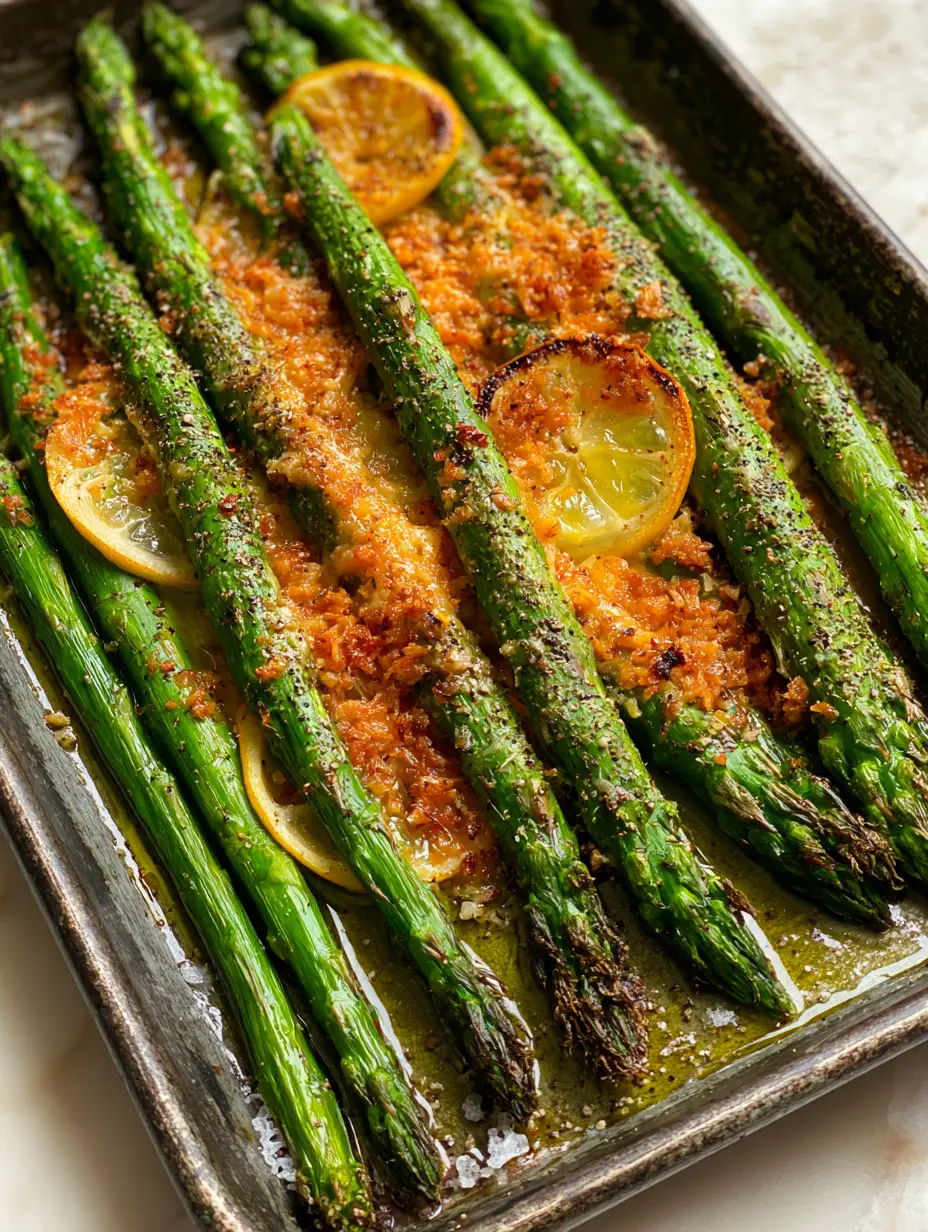
Sheet Pan Asparagus with Garlic Parmesan Crust and Charred Lemons
Ingredients
Equipment
Method
- Preheat your oven to 425°F (220°C). Wash the asparagus and pat completely dry. Trim the woody ends off the spears.
- Arrange the asparagus on a dark sheet pan. Drizzle with olive oil and minced garlic, tossing to ensure a glistening coat on every spear.
- Nestle lemon slices between the spears. Sprinkle the freshly grated parmesan cheese in an uneven layer over the asparagus. Season with half of the salt and all the pepper.
- Roast for 12-15 minutes until the tips are charred and crispy, and the parmesan crust is a deep golden brown. The lemons should have charred edges.
- Remove from the oven and sprinkle with the remaining coarse sea salt flakes. Serve immediately while the tips are at their crispiest.
Notes
Use a dark metal pan for the best charred results on the lemon and tips.
Closing Thoughts and Your Next Kitchen Adventure
Creating the perfect sheet pan asparagus is about more than just heat; it’s about the marriage of textures and the science of the roast. We hope this guide helps you achieve those perfectly charred tips and golden parmesan crusts every time you cook.
If you enjoyed this recipe, please leave a comment below and let us know how your roasted lemon rounds turned out! Don’t forget to share your photos and follow us on Pinterest for more visually stunning recipe inspiration.