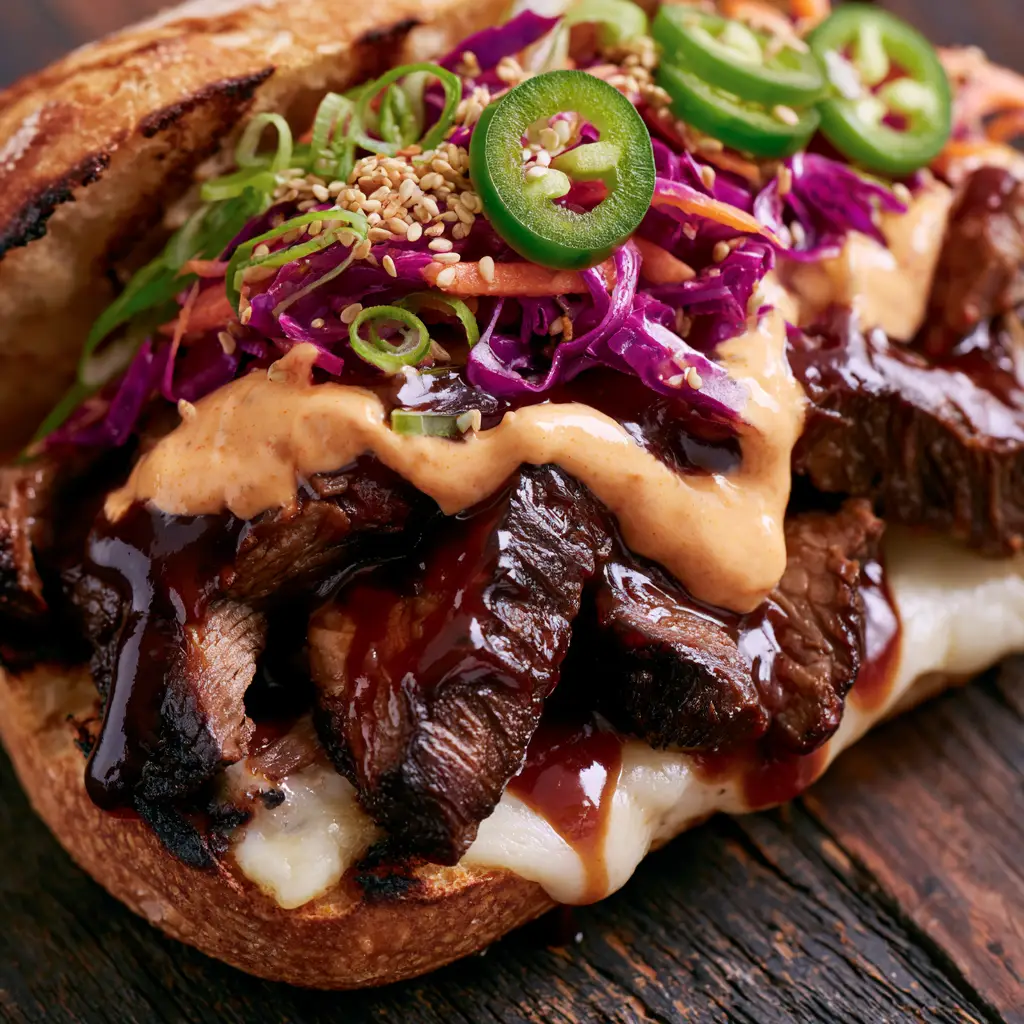
The Korean Steak Sandwich is a masterclass in culinary contrast, blending the charred, crusty edges of an artisan baguette with the velvet-smooth richness of a deep mahogany glaze. Imagine thinly sliced ribeye, seared to a perfect crust, nestled under a blanket of bubbly, melted provolone cheese that pulls away in satisfying strings with every bite.
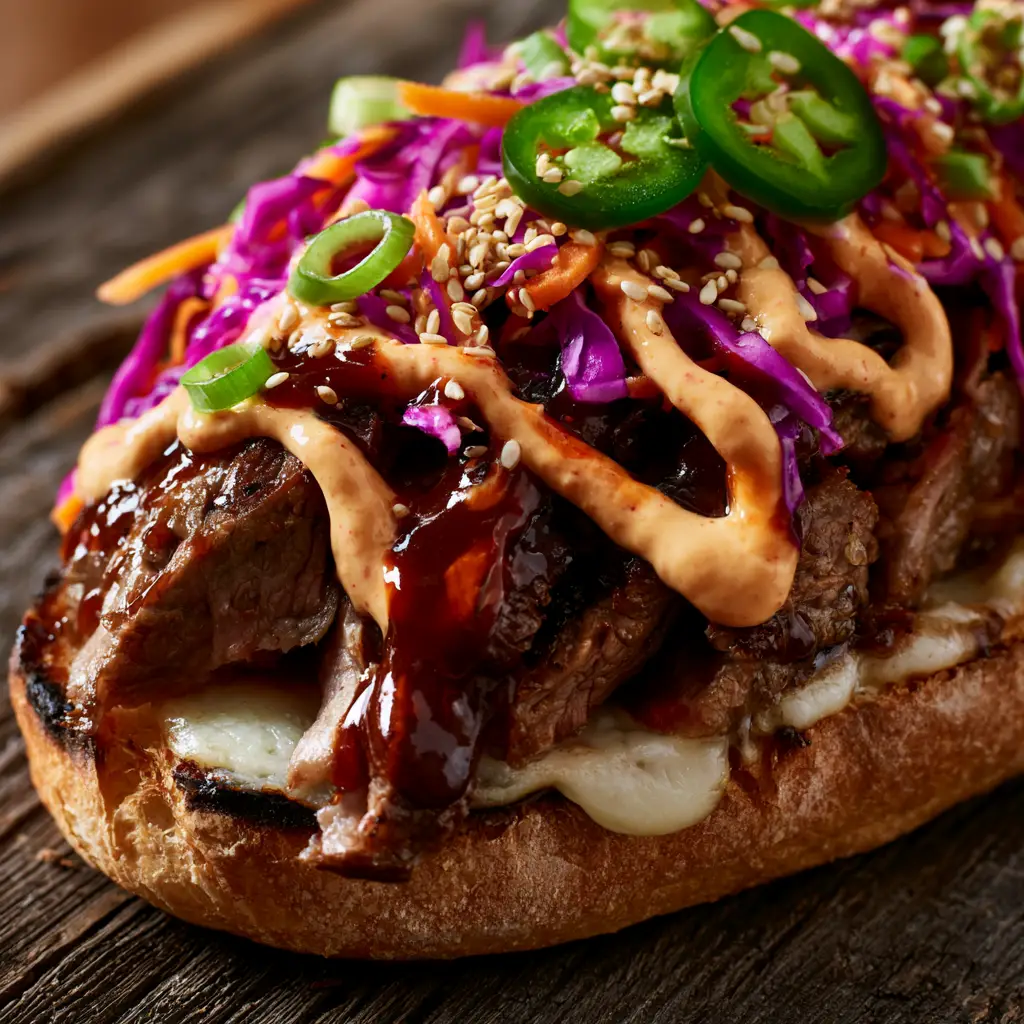
Every element of this sandwich is designed for maximum visual and flavor impact, from the vibrant purple cabbage slaw to the creamy, pale-orange Gochujang aioli drizzled in a messy, heavy zigzag. This isn’t just a meal; it’s a sensory experience that brings the bold, umami-forward flavors of a Korean barbecue right into your kitchen.
Whether you are looking for new steak dinner ideas or a show-stopping lunch, this recipe delivers a professional-grade result that looks exactly like a high-end food photograph. Let’s dive into the science of the sear and the art of the glaze.
Why This Fusion Sandwich Redefines Comfort Food
- The Mahogany Glaze: A thick, glossy, dark mahogany-colored Korean BBQ reduction that coats every fiber of the ribeye for an intense umami punch.
- Textural Harmony: The crunch of julienned carrots and shredded purple cabbage provides a necessary snap against the tender, juicy steak strips.
- Gochujang Heat: A creamy Gochujang aioli adds a gentle fermented heat and a beautiful pale-orange hue that offsets the deep greens of the scallions.
- Professional Bread Prep: An artisan baguette toasted until charred on the edges, ensuring it stands up to the heavy drizzle of sauce without becoming soggy.
Essential Ingredients for the Ultimate Korean Steak Sandwich
Ribeye Steak (1 lb / 450g): This cut is chosen for its high fat content and marbling, which ensures the steak strips remain tender and juicy even after a hard sear. Thinly slice against the grain for the best mouthfeel.
Artisan Baguette (1 large / 250g): A sturdy, crusty baguette is vital for structural integrity. Look for a loaf with a rustic exterior that will develop those beautiful charred edges when toasted.
Provolone Cheese (4-6 slices / 150g): Provolone offers a mild, creamy melt that doesn’t overpower the complex Korean flavors. It acts as a protective barrier between the bread and the sauce.
Purple Cabbage and Carrots (2 cups / 150g total): These vegetables provide the “Vibrant Slaw” component. The bright purple and orange colors are essential for the visual blueprint of the dish.
Gochujang Paste (1 tbsp / 15g): This fermented chili paste is the soul of the aioli. It provides the signature pale-orange color and a complex, salty-sweet heat.
Soy Sauce, Brown Sugar, and Ginger (for the Glaze): These foundational ingredients are simmered together to create that “glossy dark mahogany” finish that defines the steak’s appearance.
Fresh Jalapeno, Scallions, and Sesame Seeds: These are your high-contrast garnishes. The bright green rings and white seeds provide the final “pop” against the dark glaze.
Professional Tools for a Flawless Result
To achieve the “extreme macro” quality of this sandwich, you need the right gear. A heavy cast-iron skillet is non-negotiable for achieving that deep sear on the ribeye strips without overcooking the center.
You will also need a sharp chef’s knife for the julienned carrots and paper-thin jalapeno slices. A small squeeze bottle is recommended for the Gochujang aioli to achieve that specific “messy zigzag” drizzle described in the visual blueprint.
How to Build the Perfect Korean Steak Sandwich
Step 1: The High-Heat Ribeye Sear
Pat your ribeye strips dry with a paper towel; moisture is the enemy of a good crust. Heat 1 tbsp (15ml) of high-smoke-point oil in your skillet until it is shimmering and slightly smoking.
Add the steak in a single layer, ensuring you don’t crowd the pan. Sear for 1-2 minutes per side until a deep, dark brown crust forms. If you want a result like our sesame ginger tuna steak, precision timing is key.
Step 2: Reducing the Mahogany Glaze
Once the steak is seared, pour in your glaze mixture (soy sauce, brown sugar, garlic, and ginger). Reduce the heat to medium-low and toss the steak strips constantly.
Watch for the “Glossy Cue”: the sauce will bubble rapidly and then suddenly thicken into a dark, mahogany-colored syrup that clings to the meat. It should be thick enough to drip slowly, just like the visual prompt suggests.
Step 3: Toasting the Baguette and Melting the Cheese
Slice your baguette lengthwise and place the provolone slices on the bottom half. Place under a broiler for 2-3 minutes. Look for the “Bubbly Cue”: the cheese should be melted and slightly browned in spots, while the edges of the bread become dark and charred.
Step 4: Preparing the Vibrant Slaw and Aioli
In a small bowl, whisk together your mayonnaise, Gochujang, and a splash of lime juice until smooth and pale orange. Toss your shredded cabbage and julienned carrots with a teaspoon of rice vinegar to keep them bright and crunchy.
Expert Tips for Visual and Flavor Success
- The Zigzag Technique: For a “messy zigzag” aioli, move your hand quickly across the sandwich while applying even pressure to the squeeze bottle. Don’t be too precise; the messiness adds to the rustic appeal.
- Control the Heat: If your glaze becomes too thick or starts to smell like burnt sugar, immediately whisk in 1 tbsp (15ml) of water to loosen it back to a glossy state.
- Mandoline for Veggies: For the most professional-looking julienned carrots and cabbage, use a mandoline. Consistent thickness ensures every bite has the same level of crunch.
- Temperature Check: Serve immediately. The contrast between the cold slaw and the steaming, glazed ribeye is a hallmark of great fusion cooking.
What to Serve With This Fusion Masterpiece
This sandwich is incredibly rich, so pairing it with the right side dish is essential. A light, refreshing cucumber onion salad is the perfect palate cleanser to cut through the ribeye’s fat.
If you prefer something warm, these slow cooker baby potatoes provide a mellow, starchy contrast to the spicy Gochujang. For those looking for more greens, a side of sheet pan asparagus keeps the meal balanced and elegant.
Storage, Reheating, and Meal Prep
While the Korean Steak Sandwich is best enjoyed fresh, you can meal prep the components. Store the glazed steak and the slaw in separate airtight containers in the refrigerator for up to 3 days.
To reheat, warm the steak gently in a skillet with a splash of water to loosen the glaze. Do not microwave the bread with the steak; toast the bread separately to maintain that crucial charred crust. The aioli will stay fresh in the fridge for up to a week.
Frequently Asked Questions
Yes, simply reduce the amount of Gochujang paste in the aioli and remove the seeds from the fresh jalapeno garnishes.
The secret is reducing the soy sauce and brown sugar mixture over medium heat until it bubbles and thickens into a syrup that coats the back of a spoon.
Ribeye is the gold standard because its high fat content ensures the thin strips remain juicy and tender after a high-heat sear.
A sturdy ciabatta or a high-quality hoagie roll will work, as long as it has enough structure to be toasted and hold the heavy glaze.
The Complete Korean Steak Sandwich Recipe Card
Korean Steak Sandwich with Glossy Mahogany Glaze and Gochujang Aioli
Ingredients
Equipment
Method
- Whisk together mayonnaise, Gochujang, and a squeeze of lime until smooth and pale orange. Set aside.
- Slice baguette and top with provolone. Broil until cheese is bubbly and bread edges are charred.
- Sear ribeye strips in a hot skillet until a dark crust forms (about 2 minutes).
- Add soy sauce, sugar, and ginger. Simmer until the sauce is a thick, glossy mahogany glaze.
- Layer glazed steak on the cheesy baguette. Top with slaw, a messy zigzag of aioli, jalapenos, scallions, and sesame seeds.
Notes
Use a squeeze bottle for the aioli to get the professional zigzag look.
Closing & Call to Action
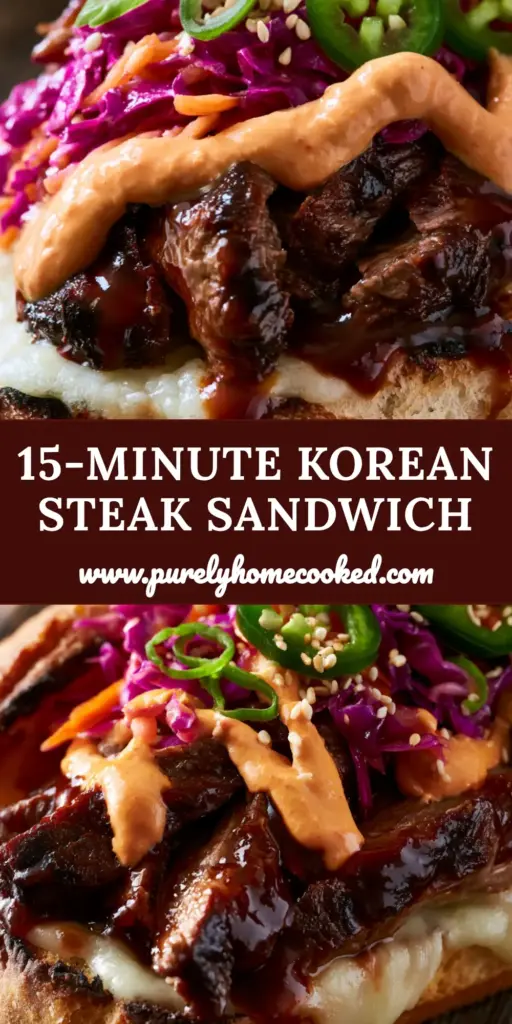
The Korean Steak Sandwich is a testament to how simple ingredients can be elevated through proper technique and visual styling. From the mahogany glaze to the charred artisan bread, every element works in harmony to create a professional-grade meal at home.
If you enjoyed this recipe, please leave a comment below and tell us how yours turned out! Don’t forget to follow us on Pinterest and pin this recipe to your favorite boards for later.