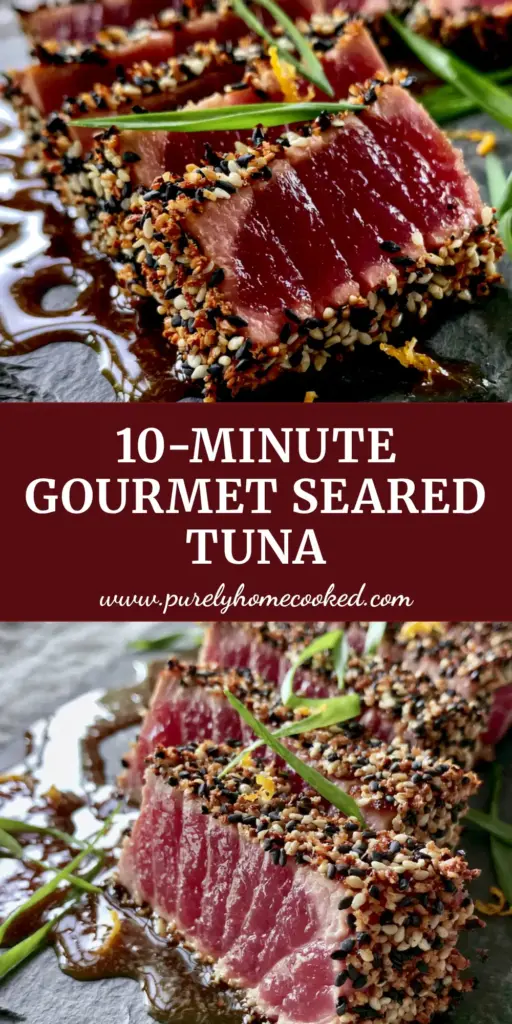
Mastering the art of pan-seared tuna steaks at home is the ultimate culinary “level up” for any home cook. Imagine a thick-cut Ahi steak, its exterior encased in a dense, crunchy crust of toasted black and white sesame seeds, while the center remains a breathtaking, bright ruby-red rare. This dish isn’t just a meal; it’s a sensory experience that brings the high-end sushi bar aesthetic directly to your kitchen table.
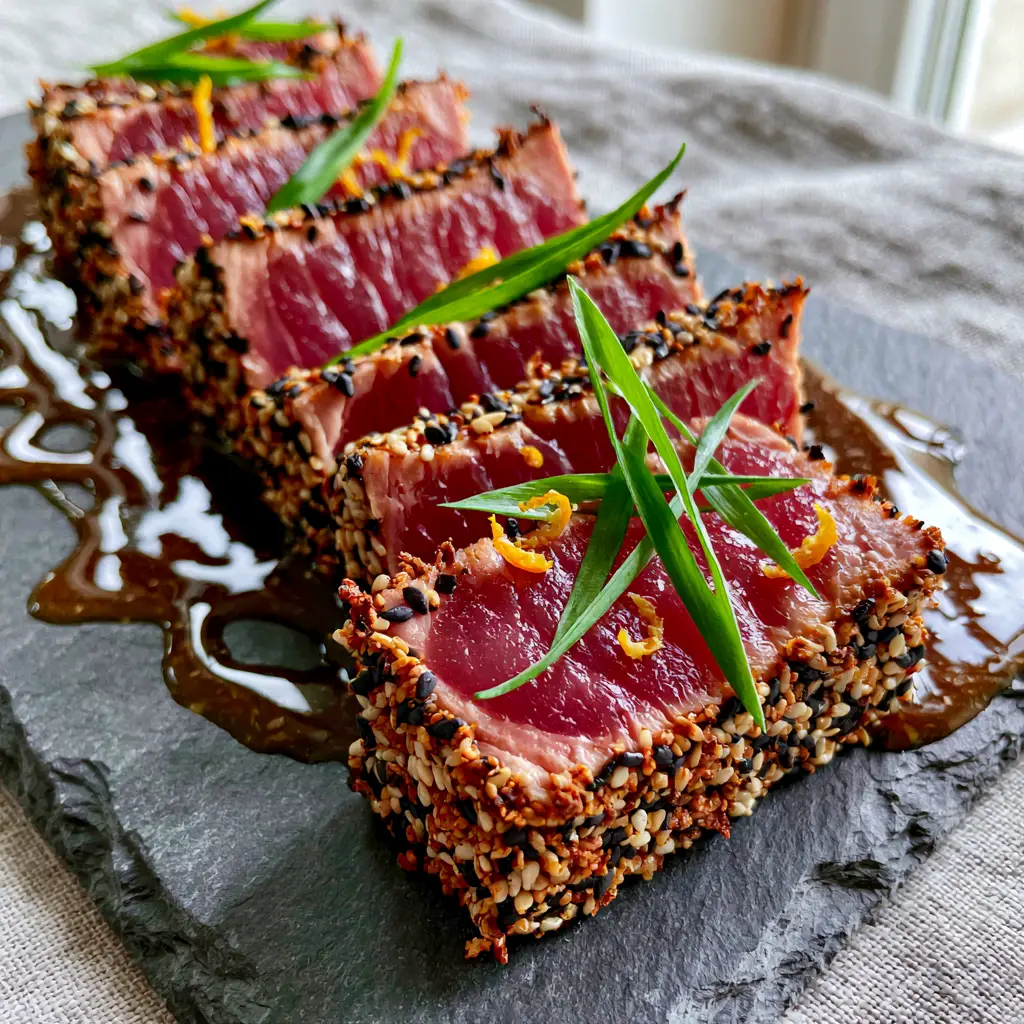
The secret to this recipe lies in the contrast of textures. We are aiming for a high-heat sear that transforms the seeds into a nutty, aromatic coating while keeping the protein buttery and tender. When sliced into 1-inch strips and drizzled with a glossy ginger-soy reduction, the result is a visually stunning masterpiece served on a dark slate plate that rivals any five-star restaurant.
Whether you are hosting a sophisticated dinner party or simply craving a high-protein, heart-healthy meal, these pan-seared tuna steaks deliver on every promise. By following these professional techniques, you will achieve that iconic “restaurant-style” finish with the confidence of a seasoned chef.
Why These Ahi Tuna Steaks Will Change Your Dinner Game
- The Ultimate Texture Contrast: The “forensic” crunch of the toasted black and white sesame seeds provides a massive textural counterpoint to the melt-in-your-mouth rare interior.
- Visual Masterpiece: The striking ruby-red center against the dark slate plate and bright green scallions makes this dish an absolute showstopper for photography or entertaining.
- Rapid Execution: While it looks complex, the actual cooking time is under five minutes, making it a perfect candidate for a luxurious weeknight dinner.
- Balanced Flavor Profile: You get salt from the soy, heat from the ginger, sweetness from the honey, and a bright citrus pop from fresh orange zest curls.
The Anatomy of the Perfect Seared Tuna: Ingredients and Sourcing
Ahi (Yellowfin or Bigeye) Tuna Steaks: Look for steaks that are at least 1.5 inches (3.8cm) to 2 inches (5cm) thick. This thickness is critical to achieving a deep sear without overcooking the center. Ensure you are purchasing “sushi-grade” or “sashimi-grade” to ensure safety for rare consumption.
Black and White Sesame Seeds: We use a 50/50 blend to create a variegated, professional look. The seeds provide the structural crust and a deep, nutty flavor that intensifies as they toast in the pan.
Low-Sodium Soy Sauce (60ml / 1/4 cup): This forms the base of our reduction. Using low-sodium allows us to control the salt levels as the sauce thickens and concentrates.
Fresh Ginger (15g / 1 tbsp, grated): Fresh ginger is non-negotiable here. It provides a sharp, spicy aromatic quality that cuts through the richness of the tuna.
Honey or Brown Sugar (30ml / 2 tbsp): This provides the necessary sugar content to create a glossy, syrupy reduction that “clings” to the meat rather than running off the plate.
Rice Vinegar (15ml / 1 tbsp): A touch of acidity balances the sweetness of the glaze and brightens the overall flavor profile.
Avocado Oil or Grapeseed Oil (30ml / 2 tbsp): You need a high-smoke point oil for searing. Olive oil will smoke and turn bitter at the temperatures required for this crust.
The Garnishes: Bias-cut scallions and delicate curls of orange zest. The orange zest provides a floral, citrus aromatic that specifically complements the ginger and tuna.
Essential Culinary Tools for High-Heat Searing
To achieve the visual result of a dense, crunchy crust, you need the right heat conductivity. A heavy-bottomed cast iron skillet or a high-quality stainless steel pan is preferred over non-stick. Non-stick pans often cannot handle the intense heat required to toast sesame seeds quickly without ruining the coating.
You will also need a very sharp chef’s knife or a slicing knife (Suhibiki style) to get those clean, 1-inch strips. A dull knife will tear the delicate rare meat and ruin the presentation. Finally, a microplane is essential for creating those “tiny orange zest curls” mentioned in our visual blueprint.
Step-By-Step: Engineering the Perfect Sesame Crust
Phase 1: Preparing the Tuna and the Crust
Remove your tuna steaks from the refrigerator about 15 minutes before cooking. Pat them extremely dry with paper towels. Any moisture on the surface will create steam, preventing the sesame seeds from adhering and crisping.
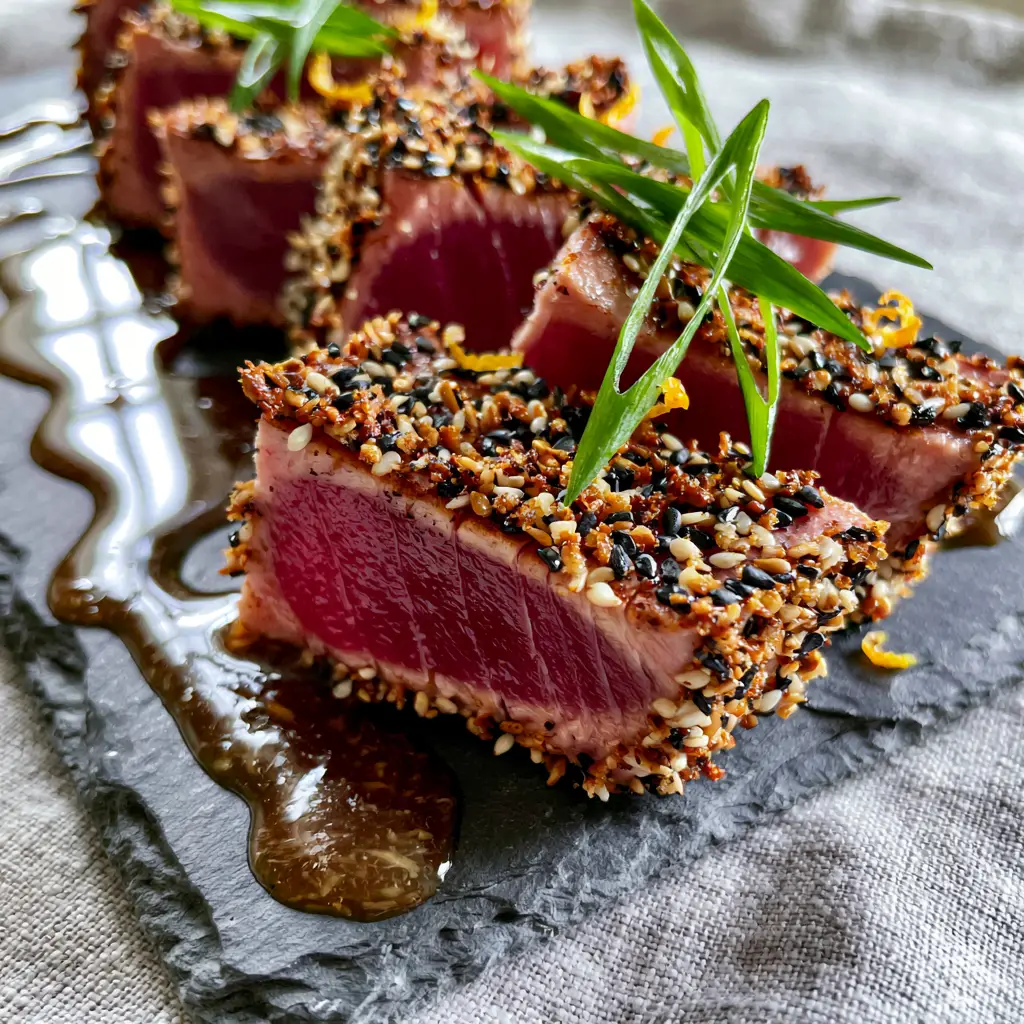
In a shallow bowl, combine 1/4 cup (40g) white sesame seeds and 1/4 cup (40g) black sesame seeds with a pinch of kosher salt. Press each side of the tuna steak firmly into the seed mixture. You want a “dense, crunchy crust,” so ensure every millimeter of the meat is covered.
Phase 2: Crafting the Glossy Ginger-Soy Reduction
In a small saucepan over medium heat, combine the soy sauce, grated ginger, honey, and rice vinegar. Simmer the mixture for 5-7 minutes. You are looking for a “glossy reduction” that coats the back of a spoon.
If the sauce is too thin, it will soak into the linen background rather than catching the light on the slate. Once it reaches a syrupy consistency, remove it from the heat and set aside. It will thicken further as it cools.
Phase 3: The High-Stakes Sear
Place your skillet over medium-high heat until the oil is shimmering and just beginning to wisps of smoke. This is the “sensory cue” that the pan is ready. Carefully place the tuna steaks in the pan. You should hear an immediate, aggressive sizzle.
Sear for exactly 45 to 60 seconds per side. Use tongs to sear the narrow edges for 15 seconds each. You are looking for the white and black seeds to turn golden and fragrant while the “white line” of cooked meat only penetrates about 1/8th of an inch into the steak.
Phase 4: Slicing and Presentation
Transfer the tuna to a cutting board and let it rest for 2 minutes. Using your sharpest knife, slice the steak into 1-inch (2.5cm) strips. This reveals the “bright ruby-red rare center” that defines this dish.
Arrange the strips on a dark slate plate. Drizzle the ginger-soy reduction artistically over the meat. Finish with a shower of bias-cut scallions and those delicate orange zest curls for a pop of color and aroma.
Expert Tips for Success
- Dryness is Key: If the tuna is even slightly damp, the seeds will fall off. Use more paper towels than you think you need.
- Don’t Overcrowd: If you are making multiple steaks, sear them one or two at a time. Overcrowding drops the pan temperature, leading to a soggy crust.
- The “Finger Test”: Seared tuna should feel firm on the outside but very soft (almost like a sponge) in the center when pressed.
- Temperature Control: If the seeds start to smoke or smell burnt before the 45-second mark, your heat is too high. Turn it down slightly but keep the sizzle going.
The Best Side Dishes to Pair with Seared Tuna
Because these pan-seared tuna steaks are quite rich and savory, you want sides that offer acidity or clean, vegetal notes. A refreshing cucumber onion salad is the perfect palate cleanser between bites of the fatty fish.
For a more substantial meal, consider serving the tuna alongside oven-roasted asparagus or a light ginger-dressed salad. If you find yourself with leftover tuna (a rare occurrence!), it works beautifully when flaked into a classic tuna pasta salad the next day.
If you enjoy the Asian-inspired flavor profile of the ginger-soy glaze, you might also love our honey garlic beef bowl or the very similar sesame ginger tuna steak recipe for a slightly different take on this technique.
Frequently Asked Questions
While possible, a cast iron or stainless steel skillet is better. These pans hold heat more effectively, which is necessary to toast the sesame seeds quickly without overcooking the fish.
The key is to pat the tuna extremely dry with paper towels before pressing it into the seeds. Moisture creates steam, which will cause the seeds to fall off during searing.
For a 1.5-inch thick steak, sear for 45-60 seconds per side over medium-high heat. This creates a crust while leaving the middle ruby-red and cool.
Yes, provided you are using high-quality, sushi-grade tuna. Unlike poultry or ground beef, high-quality tuna is traditionally and safely served rare or even raw.
You should always look for ‘sushi-grade’ or ‘sashimi-grade’ Ahi (Yellowfin or Bigeye) tuna. This ensures the fish has been handled and frozen properly to be safe for consuming rare.
The Official Recipe: Pan-Seared Sesame Ahi Tuna
Pan-Seared Tuna Steaks with a Crunchy Sesame Crust and Ginger-Soy Glaze
Ingredients
Equipment
Method
- Combine soy sauce, grated ginger, honey, and rice vinegar in a small saucepan over medium heat. Simmer for 5-7 minutes until it becomes a glossy reduction that coats a spoon.
- Pat tuna steaks completely dry. Press each side firmly into the mixed black and white sesame seeds until a dense coating is formed.
- Heat oil in a cast iron skillet over medium-high heat. Once shimmering, sear tuna for 45-60 seconds per side. The seeds should be toasted and golden, but the center must remain ruby-red.
- Rest the tuna for 2 minutes, then slice into 1-inch strips. Arrange on a dark plate, drizzle with the ginger-soy glaze, and garnish with scallions and orange zest.
Notes
Use a very sharp knife to prevent tearing the meat when slicing.
Final Thoughts on Mastering Pan-Seared Tuna Steaks
Creating restaurant-quality pan-seared tuna steaks is about precision, heat management, and high-quality ingredients. The visual contrast of the dark slate, the ruby-red fish, and the vibrant garnishes creates a dining experience that satisfies all the senses. We hope this guide helps you achieve the perfect sear every time!
If you enjoyed this recipe, please leave a comment below and let us know how your crust turned out! Don’t forget to share your creations and pin this recipe to your favorite boards on Pinterest for your next special occasion dinner.